RBA Meeting Schedule 2026

The Reserve Bank of Australia meets eight times per year to decide the official cash rate. Every meeting runs across two days, with the decision announced at 2:30pm AEST on the second day, followed by a media conference with the Governor at 3:30pm. Meeting minutes are published two weeks after each decision.
Here is the complete official RBA meeting schedule for 2026, sourced directly from the Reserve Bank of Australia.
All 8 RBA Meeting Dates for 2026
| # | Meeting dates | Decision announced | Status | SMP |
|---|---|---|---|---|
| 1 | 2–3 February 2026 | 3 February, 2:30pm | Hiked to 3.85% (unanimous) | Released |
| 2 | 16–17 March 2026 | 17 March, 2:30pm | Hiked to 4.10% (5–4) | — |
| 3 | 4–5 May 2026 | 5 May, 2:30pm | Hiked to 4.35% (8–1) | Released |
| 4 | 15–16 June 2026 | 16 June, 2:30pm | Next decision | — |
| 5 | 10–11 August 2026 | 11 August, 2:30pm | Scheduled | SMP released |
| 6 | 28–29 September 2026 | 29 September, 2:30pm | Scheduled | — |
| 7 | 2–3 November 2026 | 3 November, 2:30pm | Scheduled | SMP released |
| 8 | 7–8 December 2026 | 8 December, 2:30pm | Scheduled | — |
Source: RBA — 2026 Monetary Policy Board Meeting Dates
The Statement on Monetary Policy (SMP) is published four times per year — in February, May, August, and November — alongside the rate decision. The SMP contains the RBA’s detailed forecasts for inflation, growth, and employment, and is closely watched by economists and financial markets.
What Is the RBA Cash Rate Right Now?
The current official cash rate is 4.35%, set on 5 May 2026. This followed three consecutive 25 basis point increases in February, March and May 2026 — fully reversing all three cuts delivered in 2025. There was no meeting in April.
The next decision is 16 June 2026 at 2:30pm AEST.
For the full story on what drove all three 2026 hikes and what the June decision may bring, see our RBA interest rates 2026 full timeline.
What Happens at Each Meeting?
Each Monetary Policy Board meeting follows a consistent format:
- The Board meets over two consecutive days
- On day one, RBA staff present economic analysis, data, and policy recommendations
- On day two, the Board deliberates and votes on the cash rate decision
- The outcome is announced via a media release at 2:30pm on the second day
- The Governor holds a press conference at 3:30pm the same day
- Meeting minutes are published two weeks later
Decisions are made by majority vote. The March 2026 decision — a hike to 4.10% — was passed 5 votes to 4, illustrating that decisions are not always unanimous and that genuine disagreement within the Board is possible.
What Drives Each Decision?
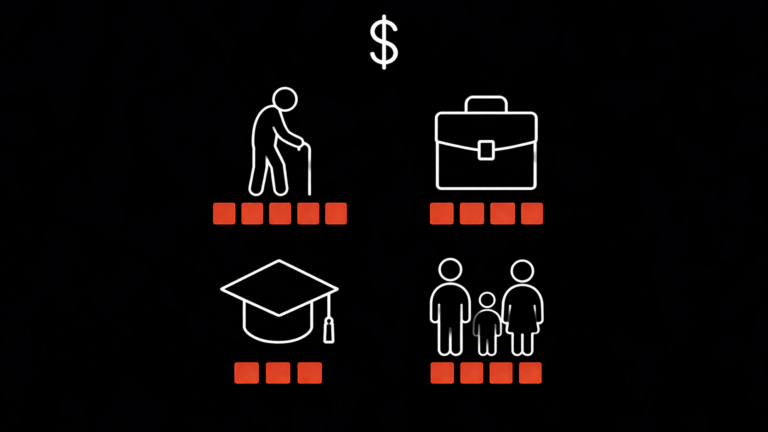
The Board assesses several key data points before every meeting:
Inflation — The RBA targets trimmed mean inflation between 2 and 3 per cent over the medium term. When inflation runs above target, the Board tilts toward hiking. Trimmed mean inflation was running at 3.4% annually at the time of the March decision. The March quarter CPI data — releasing 29 April 2026 — will be critical for the May decision.
Labour market — Unemployment, job creation, and wage growth all feed into the Board’s assessment of capacity pressures. A tight labour market with strong wage growth adds inflationary pressure. Unemployment was 4.3% as at the March 2026 data.
GDP growth — Economic activity data helps the Board judge whether the economy is running above or below its potential. Strong growth above trend increases the risk of inflation embedding. See our Australia GDP growth guide for the latest figures.
Global conditions — Exchange rates, oil prices, and the policy decisions of other central banks all influence the RBA’s thinking. The Middle East conflict’s impact on fuel prices was explicitly cited in the March 2026 decision.
Credit and housing — Mortgage growth, property prices, and household debt levels inform the Board’s view on whether monetary policy is working as intended.
What Is the Statement on Monetary Policy?
The Statement on Monetary Policy (SMP) is published four times per year alongside the February, May, August and November rate decisions. It is the RBA’s most detailed public document and contains:
- Updated forecasts for inflation, GDP growth, and unemployment
- The Board’s assessment of the global and domestic economy
- Analysis of key risks to the outlook
- Explanation of the policy reasoning behind recent decisions
The February 2026 SMP upgraded the RBA’s near-term inflation forecasts significantly, with trimmed mean inflation now expected to remain above the 2–3% target band until mid-2028. The May 2026 SMP will be watched closely for any revision to these forecasts following the March quarter CPI data.
How Each Decision Affects Your Mortgage
When the RBA changes the cash rate, variable mortgage rates typically move by the same amount. All four major banks passed on both the February and March 2026 hikes in full within days of each decision.
The three hikes in 2026 have added approximately $234–$255 per month combined on a $600,000 variable rate mortgage. All four major banks passed on the May increase in full, effective 22 May 2026.
Fixed rates are priced by banks based on bond market expectations for the future cash rate — not the current cash rate. Fixed rates can therefore move before or after an RBA decision, depending on what markets are pricing in.
For the full breakdown of how rising rates translate into repayments across different loan sizes, see our RBA cash rate and mortgage repayments guide.
Key Dates to Watch Alongside the RBA Schedule
Several economic data releases fall close to RBA meetings and heavily influence each decision:
| Date | Release | Relevance |
|---|---|---|
| 29 April 2026 | March quarter CPI (ABS) | Came in at 4.6% — drove May hike |
| 5 May 2026 | RBA decision + SMP | Hiked to 4.35% (8–1) |
| Late May 2026 | April CPI (ABS) | Key input for 16 June decision |
| Mid-May 2026 | April employment data | Labour market input for June |
| 16 June 2026 | RBA decision | ⏳ Next after May |
| Late July 2026 | June quarter CPI | Key input for August |
| 11 August 2026 | RBA decision + SMP | Mid-year review |
| Late October 2026 | September quarter CPI | Key input for November |
| 3 November 2026 | RBA decision + SMP | Year-end outlook |
| 8 December 2026 | RBA decision | Final meeting of 2026 |
FAQ — RBA Meeting Schedule 2026
When does the RBA next meet in 2026?
The next meeting is 15–16 June 2026. The decision will be announced at 2:30pm AEST on 16 June.
How many times does the RBA meet in 2026?
Eight times. The RBA moved from eleven meetings per year to eight in 2024, giving the Board more time between decisions to assess incoming data.
What time is the RBA decision announced?
Always at 2:30pm AEST/AEDT on the second day of the meeting. The Governor holds a press conference at 3:30pm.
Did the RBA meet in April 2026?
No. April is not a scheduled meeting month in 2026. The Board met in March and does not meet again until May.
Where can I find the official RBA meeting schedule?
The official schedule is published by the RBA at rba.gov.au/schedules-events.
What is the cash rate right now?
4.35% — set on 5 May 2026 following a third consecutive 25 basis point hike, decided by an 8-1 vote.
Will the RBA raise rates at the June 2026 meeting?
The June outlook is uncertain. Westpac is the only major bank forecasting a further hike, to 4.60 per cent. ANZ, CBA and NAB are holding a pause forecast. The April CPI data, due in late May, is the key input. For the full analysis see our RBA interest rates 2026.
This page is updated after each RBA decision. Dates are sourced from the official RBA Board Meeting Schedules. Last updated: 7 May 2026
This article is for general informational purposes only and does not constitute financial advice. Always consult a registered financial adviser for advice specific to your situation.