
The subclass 820 and 801 partner visa in Australia is the onshore pathway that allows the spouse or de facto partner of an Australian citizen, permanent resident, or eligible New Zealand citizen to live, work, and study in Australia — first temporarily, then permanently. In 2026, the total cost exceeds $9,000 and the full journey from application to permanent residency takes three to four years or more.
Here is a complete guide to the subclass 820 and 801 partner visa in Australia for 2026, based on publicly available information from the Department of Home Affairs.
What Is the Subclass 820 and 801 Partner Visa?
The subclass 820 and 801 partner visa is a two-stage onshore visa pathway administered by the Department of Home Affairs. It is designed for applicants who are already in Australia at the time of application and are in a genuine and continuing relationship with an Australian citizen, permanent resident, or eligible New Zealand citizen.
The two stages work as follows:
Subclass 820 — Temporary partner visa: This is the first stage. If eligible, the subclass 820 is granted after the initial assessment, allowing the applicant to live, work, study, and access Medicare in Australia while the permanent stage is being processed.
Subclass 801 — Permanent partner visa: This is the second stage. It is assessed approximately two years after the initial application date, provided the relationship is still genuine and continuing. Once granted, the subclass 801 provides Australian permanent residency.
Both stages are applied for simultaneously in a single combined application — you lodge one application and pay one fee, and the Department assesses the two stages separately over time.
Onshore vs Offshore — Which Pathway Applies to You?
The 820/801 is specifically for applicants who are in Australia at the time of application. If you are outside Australia, the equivalent pathway is the subclass 309 and 100 offshore partner visa, which follows the same two-stage structure but is assessed for applicants overseas.
If you are engaged but not yet married, and your partner is overseas, the subclass 300 Prospective Marriage visa allows your partner to travel to Australia to marry you within 9 to 15 months. After marriage, they can then apply for the onshore 820/801 pathway.
Subclass 820 and 801 Partner Visa Requirements in 2026
To be eligible for the subclass 820/801 partner visa, you must meet all of the following requirements:
Eligible sponsor: Your partner — the Australian citizen, permanent resident, or eligible New Zealand citizen — must be your sponsor. The sponsor must not have previously sponsored two or more partners for Australian visas, and must not have been sponsored themselves as a partner within the past five years.
Genuine and continuing relationship: Your relationship must be genuine, ongoing, and meet the definition of either a married or de facto relationship under Australian migration law.
For married couples: you must provide your marriage certificate and evidence that the marriage is genuine — not simply the existence of a marriage certificate.
For de facto couples: you must generally demonstrate that you have lived together in a genuine de facto relationship for at least 12 months immediately before lodging your application. This 12-month requirement can be waived if you have registered your relationship with an Australian state or territory — for example, NSW, Victoria, Queensland, South Australia, and the ACT all have relationship registers.
Same-sex couples are fully eligible for the partner visa under Australian migration law, which recognises same-sex relationships equally.
In Australia at time of application: You must be in Australia when you lodge the subclass 820 application and when the subclass 820 is granted.
Health and character: You and all included family members must meet health and character requirements, including health examinations with a panel physician and police clearance certificates from every country where you have lived for 12 months or more in the past 10 years.
The Four Categories of Relationship Evidence
In 2026, the Department of Home Affairs has strengthened its assessment of relationship evidence. Simply being married is not sufficient — the Department requires substantial evidence across four statutory categories. Strong evidence in all four categories significantly reduces the risk of requests for further information and can accelerate processing.
1. Financial aspects Evidence that you share financial commitments — joint bank accounts, joint mortgage or rental lease agreements, shared household bills, or evidence of financial support between partners.
2. Nature of the household Evidence that you share a home — lease agreements or property records showing both names, utility bills, correspondence addressed to both partners at the same address, and evidence of shared household responsibilities.
3. Social aspects Evidence that your relationship is recognised by others — photographs together across different occasions and locations, evidence of joint travel, statutory declarations from friends and family members (Form 888 or equivalent legal declarations) confirming they know you as a couple, and evidence of attendance at social events together.
4. Commitment Evidence of the ongoing and long-term nature of your relationship — the length of your relationship, evidence of future plans together, knowledge of each other’s personal circumstances, and any joint assets or liabilities.
The more comprehensive and consistent your evidence across all four categories, the stronger your application.
Subclass 820 and 801 Partner Visa Fees in 2026
The partner visa is one of the most expensive visa applications in Australia. In 2026, the main application fee for the primary applicant is approximately $9,095 AUD. This single fee covers both the temporary subclass 820 stage and the permanent subclass 801 stage — you do not pay again when the permanent stage is assessed.
Additional costs beyond the application fee include:
- Health examinations for all applicants
- Police clearance certificates from all relevant countries
- Certified translation of foreign language documents
- Statutory declarations from supporting witnesses
- Migration agent fees if professional assistance is used
Total out-of-pocket costs including all ancillary expenses typically range from $10,000 to $15,000 or more for most applicants, before accounting for migration agent or lawyer fees.
Subclass 820 and 801 Processing Times in 2026
Partner visa processing times are among the longest of any Australian visa category. Current processing times as of 2026:
Subclass 820 (temporary stage): Approximately 23 to 30 months from the date of application lodgement.
Subclass 801 (permanent stage): Approximately 12 months once the applicant becomes eligible — which is generally around 2 years after the initial application date.
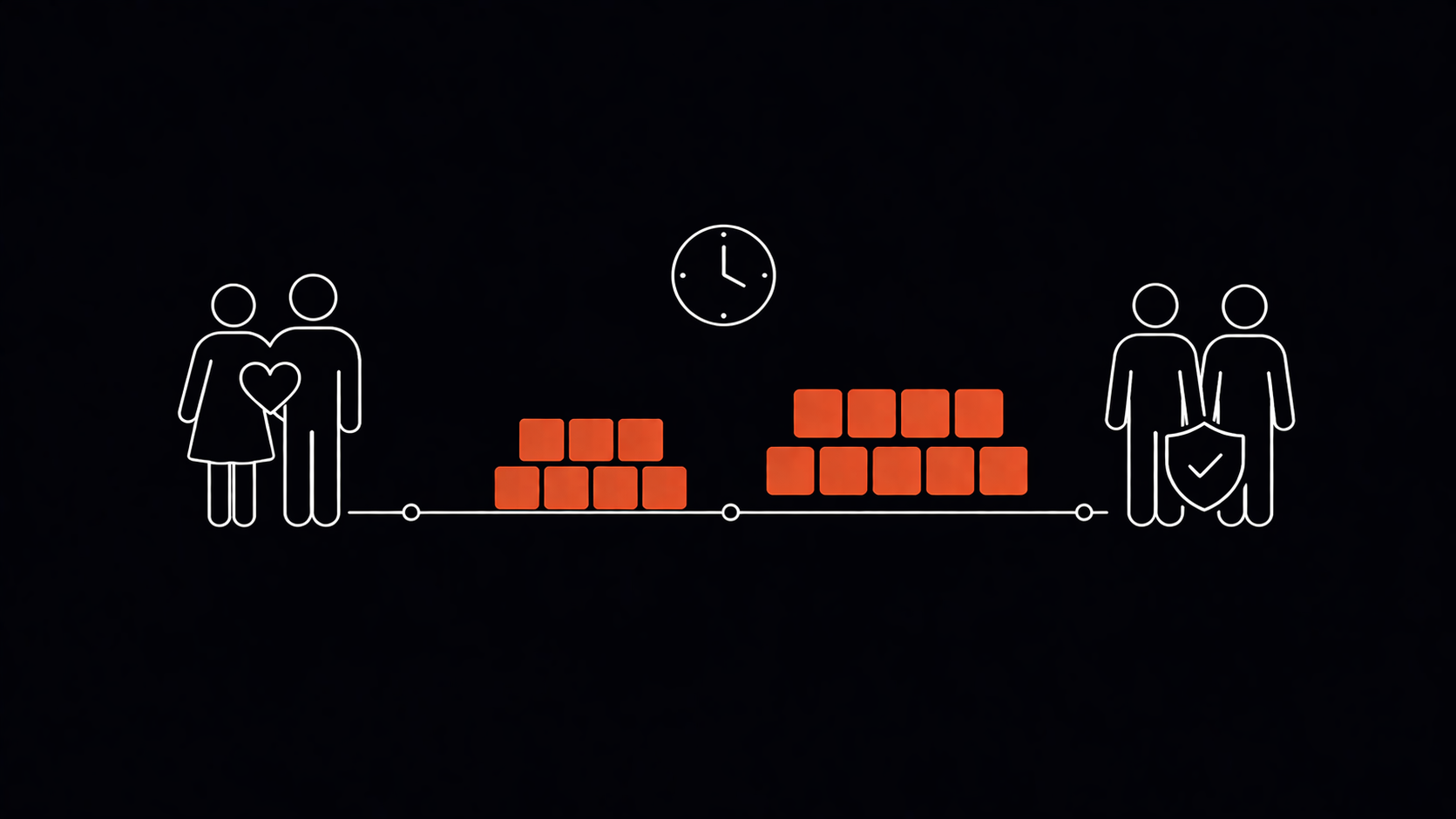
Total journey: From lodging the initial application to receiving permanent residency, most applicants should plan for a total of 3 to 4 years or longer depending on the complexity of their case and Department workload.
Exception — long-term relationships: If the relationship is considered long-term — generally 3 or more years, or 2 or more years with a dependent child — the Department may grant the subclass 820 and 801 simultaneously, significantly reducing the overall waiting time.
The single most effective way to reduce processing time is to lodge a complete, well-documented application from the outset. Incomplete applications are the most common cause of delays and requests for further information.
Work Rights and Entitlements on the Subclass 820 Visa
While waiting for the subclass 820 to be granted after lodging the application, most onshore applicants are issued a Bridging Visa that allows them to remain in Australia lawfully and work. Once the subclass 820 is granted, the holder receives:
- Full unrestricted work rights — work for any employer in any occupation without sponsorship
- Study rights — enrol in any Australian course
- Medicare access — access to Australia’s public healthcare system
- Travel — travel in and out of Australia, subject to the travel facility on the visa. A Bridging Visa B must be obtained before travelling during the bridging visa period
Family members including dependent children can be included in the application. The sponsor’s children from previous relationships may also be included subject to eligibility requirements.
How to Apply for the Subclass 820/801 Partner Visa — Step by Step
Step 1 — Confirm eligibility Check that both you and your sponsor meet all eligibility requirements — relationship type, sponsorship history, and location requirements. Confirm de facto relationship history or marriage status.
Step 2 — Gather relationship evidence Begin collecting evidence across all four statutory categories. The more comprehensive your evidence, the stronger your application. Start this process well before lodging — gathering statutory declarations from witnesses takes time.
Step 3 — Complete health and character checks Police clearance certificates can take weeks to months depending on the country. Begin these early. Health examinations will be requested by the Department during processing.
Step 4 — Sponsor completes their part The sponsor must complete their sponsorship application and declaration as part of the combined application process.
Step 5 — Lodge through ImmiAccount Create or log in to your ImmiAccount and complete the combined subclass 820/801 application online. Pay the approximately $9,095 application fee.
Step 6 — Receive Bridging Visa and await 820 grant After lodging, you will typically receive a Bridging Visa allowing you to remain in Australia. The Department will assess your application and may request further information during this period. Respond to any requests promptly.
Step 7 — 801 assessment at the two-year mark Approximately two years after your application, the Department will assess your eligibility for the permanent subclass 801. You will need to demonstrate that your relationship is still genuine and continuing. Update your evidence at this stage.
Pathway to Citizenship From the Partner Visa
Once the subclass 801 permanent partner visa is granted, you become an Australian permanent resident. You can live, work, and study anywhere in Australia indefinitely. After meeting the residency requirements — generally four years of living in Australia including at least one year as a permanent resident — you can apply for Australian citizenship.
For the full picture of what life in Australia involves financially, see our cost of living vs the world guide — Australia’s Cost of Living vs the World in 2026 — How Do We Actually Compare? — and our rent prices guide — Australia’s Rent Crisis in 2026 — What the Data Actually Shows — for a realistic understanding of housing costs.
This article is for general informational purposes only and reflects the author’s own research and understanding of publicly available information. It does not constitute immigration or legal advice. Visa rules, fees, and processing times change regularly — always verify current requirements directly with the Department of Home Affairs at immi.homeaffairs.gov.au or through a registered migration agent.