SC 820/801 Onshore Partner Visa Australia 2026: Bridging Visa, Costs and Timeline

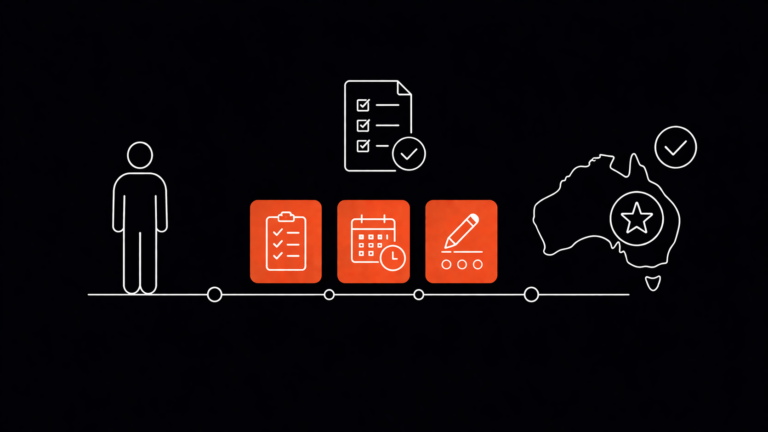
If you are already in Australia and your partner is an Australian citizen, permanent resident or eligible New Zealand citizen, the Subclass 820/801 is the onshore route to permanent residency together. You lodge one combined application, pay one fee, receive a Bridging Visa A immediately after lodgement, and then wait for the temporary 820 to be granted before the permanent 801 is assessed approximately two years later.
This guide covers the 2026 eligibility rules, fees, bridging visa conditions, evidence requirements and how the process actually works — based on information from the Department of Home Affairs.
Disclaimer: This article is general information only and does not constitute migration advice. Consult a Registered Migration Agent (MARN) for advice specific to your circumstances.
At a glance
| Visa type | Temporary (820) + Permanent (801) — one combined application |
| Who applies | Spouse or de facto partner already in Australia |
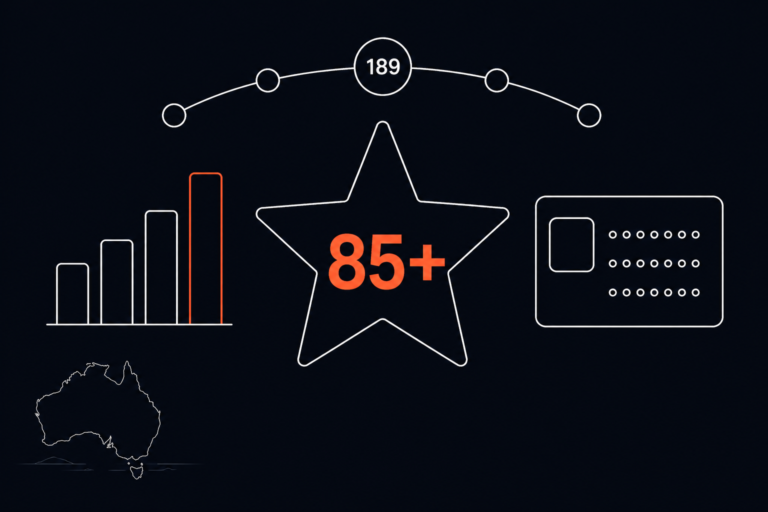
| Application fee | $9,365 AUD (2025–26) — covers both stages |
| Bridging Visa A | Issued on lodgement — lets you stay and work while waiting |
| Stage 1 (820) processing | 8–18 months for most applicants |
| Stage 2 (801) processing | 6–18 months after eligibility (2 years from lodgement) |
| Total realistic timeline | 3–4 years from lodgement to permanent visa |
| Medicare access | From lodgement — on Bridging Visa A |
| Where to apply | ImmiAccount |
| Offshore equivalent | SC 309/100 offshore partner visa |
What is the SC 820/801 visa?
The SC 820/801 is a two-stage onshore partner visa:
Subclass 820 (Temporary): granted first, allowing you to live, work and study in Australia with full unrestricted rights while the permanent stage is assessed in the background.
Subclass 801 (Permanent): the permanent residency stage, assessed automatically around two years after your original lodgement date. You do not lodge a separate application or pay an additional fee for the 801 — it is assessed as part of the original combined application.
The defining feature of the 820/801 compared to the offshore 309/100 is that you must be in Australia when you apply. You are issued a Bridging Visa A immediately after lodgement, which lets you remain lawfully in Australia from the moment your current visa expires until the 820 is decided. This is the main practical advantage over the offshore pathway — you do not need to leave Australia and wait overseas for the grant.
Who is eligible?
You must be the spouse or de facto partner of an Australian citizen, permanent resident or eligible New Zealand citizen. Married couples, de facto couples and same-sex couples are all eligible.
Relationship requirements
Married couples: your marriage must be legally valid under Australian law.
De facto couples: you must generally have been in a genuine de facto relationship for at least 12 months before applying. This requirement can be waived if you have registered your relationship in an Australian state or territory. You must also be living together, be married or have registered your relationship before the 820 is lodged.
Same-sex couples: Australian migration law recognises same-sex relationships on exactly the same basis as any other de facto or spousal relationship.
Other requirements
- You must be in Australia at the time of lodgement
- You must meet health requirements — medical examination with a DHA-approved panel physician
- You must meet character requirements — police clearances from every country you have lived in for 12 or more months since turning 16
- There is no mandatory English language test for the 820/801
- Your sponsor (your Australian partner) must be approved by the DHA — their sponsorship application is lodged at the same time
- Your sponsor must not have previously sponsored two or more partners for Australian visas, and must not have been sponsored themselves as a partner within the past five years
Dependent children can be included as secondary applicants. Children must be in Australia at the time of lodgement to be included. Children living overseas can be added as non-migrating dependents and included later.
How much does it cost?
The base application fee for the 2025–26 financial year is $9,365 AUD for the primary applicant. This covers both the 820 and 801 stages in a single upfront payment.
| Fee component | Amount (2025–26) |
|---|---|
| Primary applicant (base charge) | $9,365 |
| Additional applicant aged 18+ | $4,685 |
| Additional applicant aged under 18 | $2,345 |
| Sponsorship application | No separate charge |
Note: Applicants who held a Subclass 300 Prospective Marriage Visa before applying for the 820/801 pay a reduced fee — the base charge is $1,560 rather than $9,365, as the bulk of the fee was already paid at the 300 stage.
Additional costs to budget for: medical exam ($300–$500 per person), police clearances ($50–$200 per country), and biometrics where required. Fees are set by the Department of Home Affairs and typically increase each July in line with the Consumer Price Index.
How long does it take?
| Stage | Processing time (2026) |
|---|---|
| Subclass 820 (temporary) | 8–18 months for most applicants |
| Eligibility for 801 | 2 years after original lodgement date |
| Subclass 801 (permanent) | 6–18 months after eligibility |
| Total from lodgement to PR | 3–4 years realistically |
The onshore 820 pathway processes faster at the temporary stage than the offshore 309 — 8–18 months compared to 14–26 months — because onshore applications are generally treated as higher priority given the applicant is already residing in Australia on a bridging visa.
The single most effective way to reduce processing time is lodging a decision-ready application from the outset. The DHA may give applicants only one opportunity to provide additional information after lodgement. Incomplete applications and thin relationship evidence are the most common causes of delays.
The double grant: if you and your partner have been in a relationship for three or more years at the time of lodgement, or two or more years with a dependent child, the DHA may grant the 820 and 801 simultaneously. This is a discretionary decision — it is not automatic — but it does occur for well-established relationships with strong evidence.
The Bridging Visa: what you actually get from day one
The bridging visa is one of the most important and least understood aspects of the onshore partner visa. Understanding which bridging visa you hold and its conditions matters significantly for your day-to-day life while the application is processing.
Bridging Visa A (BVA)
When you lodge your 820/801 application, a Bridging Visa A is automatically issued. The BVA comes into effect when your current substantive visa expires — not immediately on lodgement. Until your current visa expires you remain on that visa. When it expires the BVA activates.
Key BVA conditions:
- Full work rights — no restrictions on employer or hours
- No travel rights — if you depart Australia on a BVA your visa is cancelled and you forfeit the partner visa application. This is a critical point many applicants miss.
- Medicare access — you can enrol in Medicare immediately after lodging the 820/801 application, even before the BVA activates
- The BVA does not carry across conditions from your previous visa — if you were on a Student Visa with work hour restrictions, the BVA removes those restrictions
Bridging Visa B (BVB)
If you need to travel outside Australia while your 820 application is processing, you must apply for a Bridging Visa B before departing. The BVB allows you to travel and return without forfeiting your partner visa application. It has a specified travel period — you must return before the BVB travel period expires or your application lapses. Apply for a BVB through ImmiAccount before any travel.
Bridging Visa E (BVE)
If you do not hold a valid substantive visa at the time of lodgement — for example your visa has already expired — you may be issued a Bridging Visa E rather than a BVA. The BVE does not carry automatic work rights. If you hold a BVE and need to work, you will need to make a submission to the DHA demonstrating financial hardship. Additionally, holding a BVE resets your Australian citizenship clock to zero, which affects future citizenship eligibility timelines.
The practical takeaway: apply while you still hold a valid substantive visa to receive a BVA rather than a BVE.
What evidence do you need?
The DHA assesses your relationship across four categories. Meaningful evidence in all four is required — thin evidence in any single category is the most common reason applications are delayed or refused. The standard of evidence required is the same as the offshore 309/100.
1. Financial
- Joint bank account statements showing regular transactions
- Joint property ownership or shared lease agreement with both names
- Joint utility bills, phone plans or household expenses
- Joint insurance policies — health, car, home contents
- Records of financial support between partners — transfers, shared savings goals
2. Household
- Shared lease or mortgage showing both names
- Statutory declarations from people who have witnessed you living together
- Mail addressed to both of you at the same address
- Evidence of shared domestic responsibilities
3. Social
- Photos together at events, milestones, with family and friends on both sides
- Form 888 statutory declarations — written statements from people who know you as a couple. Aim for at least two, ideally more from a mix of family and friends
- Joint travel records — flights booked together, shared accommodation, itineraries
- Social media evidence of the relationship publicly and over time
4. Commitment
- Evidence of plans for a long-term future — shared property, joint memberships, shared financial goals
- Evidence of knowledge of each other’s background, family, and personal history
- Joint legal documents — wills, powers of attorney, beneficiary designations
- Evidence of meeting each other’s families and being known to each other’s social circles
The DHA places significant weight on the totality of evidence across all four categories. More evidence across more categories consistently produces better outcomes than a large volume of evidence concentrated in only one or two areas.
How to apply: step by step
- Check you are in Australia and hold a valid substantive visa before lodging. Applying while your visa is still valid means you receive a Bridging Visa A — not a BVE.
- Gather your relationship evidence across all four categories. The application accepts up to 100 documents per person.
- Create or log into ImmiAccount at immi.homeaffairs.gov.au.
- Lodge the combined Subclass 820/801 application online. Your Australian partner lodges their sponsorship application through ImmiAccount at the same time.
- Pay the application fee — $9,365 for the primary applicant in 2025–26.
- After lodgement, enrol in Medicare using your passport, the Bridging Visa A grant notice, and the acknowledgement of application from the DHA.
- Complete your medical examination at a DHA-approved panel physician after receiving instructions through ImmiAccount — do not book before lodging.
- Obtain police clearances from every country you have lived in for 12 or more months since turning 16. See DHA country-specific guidance for requirements by country.
- If you need to travel outside Australia at any point before the 820 is granted, apply for a Bridging Visa B through ImmiAccount before departing. Do not leave Australia on a BVA.
- Monitor your application through VEVO at any time.
- Once the 820 is granted, continue adding to your relationship evidence file. Approximately two years after your original lodgement date, the DHA will assess your eligibility for the 801. You may be asked to provide updated evidence at this stage.
What rights do you have on the Subclass 820?
Once the 820 is granted:
- Live in Australia until the 801 decision is made
- Work for any employer in any occupation with no restrictions
- Study in Australia
- Travel in and out of Australia freely — check your travel facility dates before departing as the 820 has a travel facility that may need to be renewed
- Access Medicare — Australia’s public healthcare system
- Enrol in the Adult Migrant English Program (AMEP) for free English classes if eligible
What happens when the Subclass 801 is assessed?
Approximately two years after your original lodgement date — not after the 820 grant date — the DHA will assess whether you still meet the requirements for permanent residency. They will check:
- Your relationship is still genuine and ongoing
- You continue to meet health and character requirements
- Your sponsor is still an eligible Australian citizen, permanent resident or eligible New Zealand citizen
You may be asked for updated relationship evidence. It is good practice to keep adding to your evidence file throughout the 820 period — ongoing joint bank statements, photos, travel records — so you are ready when the 801 assessment arrives.
If your relationship breaks down after the 820 is granted but before the 801 is assessed, you may still be eligible for the 801 if the relationship ended due to family violence, the death of your sponsor, or if there are dependent children of the relationship.
Once the 801 is granted you become an Australian permanent resident. You can live, work and study anywhere in Australia indefinitely. The 801 creates a pathway to Australian citizenship subject to meeting the residence requirements under the Australian Citizenship Act.
SC 820/801 vs SC 309/100: which pathway is right for you?
The right pathway depends on where you are when you apply. See the full SC 309/100 Offshore Partner Visa Australia 2026 guide for the offshore equivalent.
| SC 820/801 (onshore) | SC 309/100 (offshore) | |
|---|---|---|
| Where you apply | Must be in Australia | Must be outside Australia |
| Bridging visa | BVA issued on lodgement — stay in Australia | No bridging visa — remain outside until grant |
| Temporary stage processing | 8–18 months | 14–26 months |
| Travel while waiting | Requires BVB — departing on BVA cancels application | Can visit Australia on SC 600 visitor visa |
| Medicare access | From lodgement | From 309 grant |
| Fee (2025–26) | $9,365 base | $9,365 base |
| Best for | Partner already in Australia on any valid visa | Partner currently outside Australia |
Frequently asked questions
Can I apply on a visitor visa?
Eligibility to apply for the 820/801 from a visitor visa depends on the conditions of that specific visitor visa. Some visitor visas have a condition (condition 8503 — “no further stay”) that prevents the holder from applying for most visas from within Australia. Check your visa conditions through VEVO before lodging.
Can I travel while my application is processing?
Yes, but you must apply for a Bridging Visa B before departing. Leaving Australia on a Bridging Visa A cancels your partner visa application. Apply for the BVB through ImmiAccount before any travel and ensure you return before the BVB travel period expires.
What if my visa expires before the 820 is decided?
Your Bridging Visa A activates when your substantive visa expires, keeping you lawful in Australia. The BVA continues in effect until the 820 is decided. If you were not holding a valid substantive visa when you lodged, you may have been issued a BVE instead — which has different work right conditions.
Can I change jobs while on the bridging visa or 820?
Yes. The BVA and the 820 both carry unrestricted work rights. You can change employers, change occupations, and work for multiple employers without any notification to the DHA.
What if my relationship ends during the 820 period?
If the relationship breaks down after lodgement but before the 820 is granted, the application will generally be refused. If the breakdown occurs after the 820 is granted but before the 801 assessment, you may still be eligible for the 801 if the relationship ended due to family violence, the death of your sponsor, or if there are dependent children of the relationship.
Do I need a migration agent?
You are not required to use one. However, with fees exceeding $9,000, complex bridging visa conditions and a 3–4 year process, many couples use a Registered Migration Agent to ensure the application is decision-ready from the start. Verify any agent’s MARN registration at mara.gov.au before engaging them.
This article is general information only. It does not constitute migration advice. For advice specific to your circumstances, consult a Registered Migration Agent registered with the Migration Agents Registration Authority (MARA).