
Australia’s cost of living compared to the rest of the world in 2026 is genuinely complicated — expensive by some measures, competitive by others, and dramatically different depending on which category you examine. Whether Australia is affordable or not depends almost entirely on what you are comparing and where you are coming from.
Here is what the data actually shows.
Where Australia Ranks Globally on Cost of Living in 2026
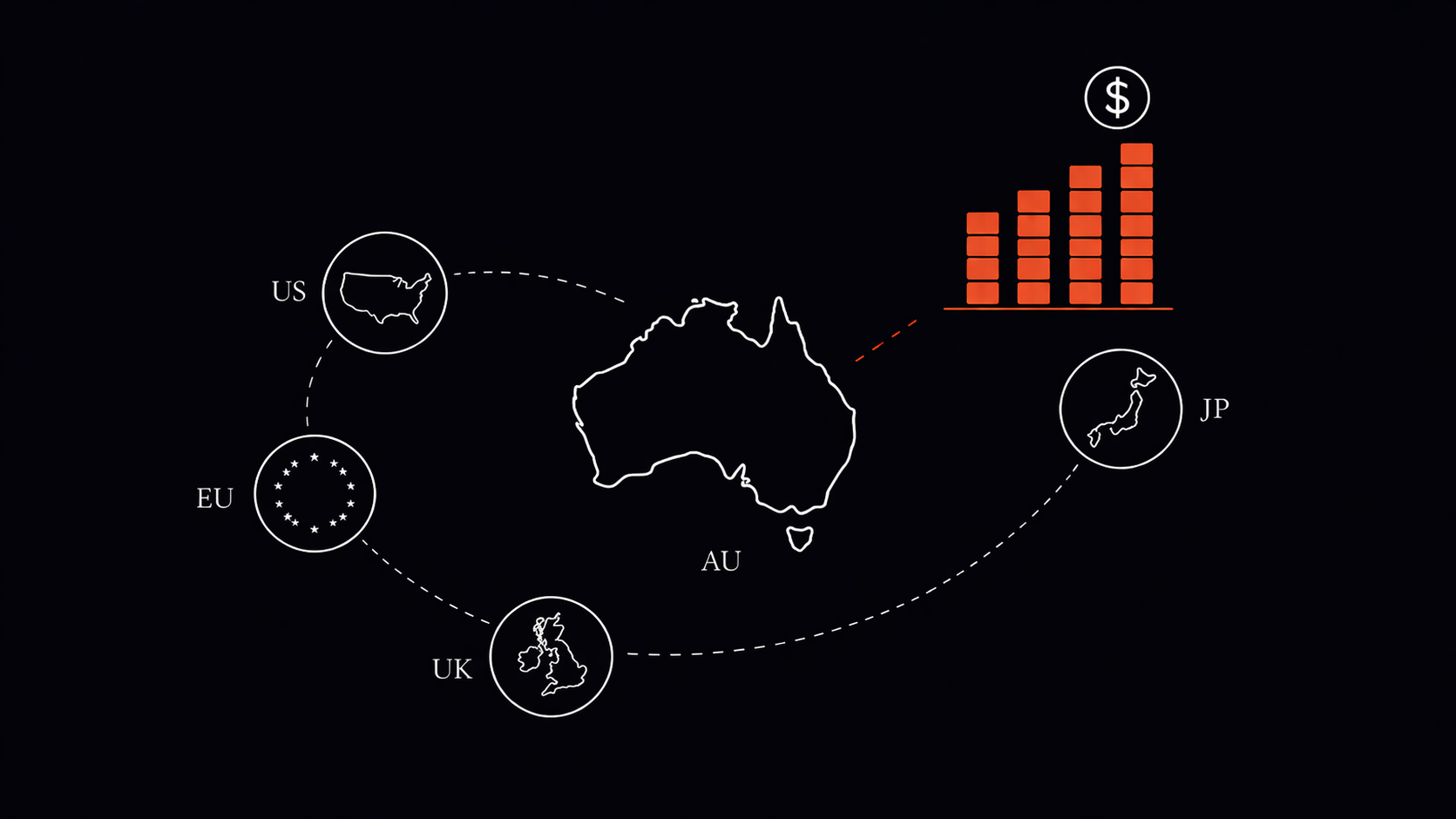
Australia’s cost of living compared to the world places it at approximately 13th most expensive out of 155 countries according to Numbeo’s 2026 Cost of Living Index — higher than the United States, which ranks 19th, but well below Switzerland, Singapore, and several small island economies that top the list.
The Numbeo index measures everyday expenses including rent, groceries, restaurants, and transport relative to New York City as a baseline of 100. Australia’s overall cost of living is approximately 13 per cent higher than the United States when housing is included, according to Numbeo analysis.
The OECD’s January 2026 Economic Survey of Australia noted that Australia enjoys high living standards supported by strong institutions and human capital, while identifying housing affordability and productivity growth as key areas requiring reform.
Australia vs the UK — Higher Wages, Higher Grocery Bills
Comparing Australia’s cost of living to the United Kingdom produces a nuanced picture.
Rent: Sydney’s three-bedroom apartment outside the city centre costs approximately the same as London’s equivalent — sometimes less. London is consistently the more expensive city for central rental accommodation. However, Manchester, Birmingham, and other UK regional cities offer significantly more affordable rents than their Australian equivalents such as Brisbane, Perth, and Adelaide.
Groceries: Australian groceries are approximately 10 to 15 per cent more expensive than UK equivalents overall. Fresh produce and meat are notably pricier in Australia — beef costs approximately 50 per cent more per kilogram than in the UK, partly driven by the export demand factors that have pushed Australian beef and lamb prices to record highs in 2026. UK shoppers benefit from intense competition among discount retailers including Aldi, Lidl, and multiple major supermarket chains.
Wages: This is where Australia’s position improves significantly. Australian salaries are 20 to 30 per cent higher on average than UK equivalents across many professions. The Australian minimum wage of $25.05 per hour is approximately 18 per cent higher than the UK equivalent. Software engineers earn approximately 10 per cent more in Australia than the UK; nurses earn approximately 14 per cent more. And Australian employers contribute 12 per cent of earnings to superannuation — compared to just 3 per cent for UK workplace pension contributions — representing a substantial long-term wealth advantage.
Healthcare: The UK’s NHS provides free healthcare at the point of use — a significant advantage over Australia’s hybrid Medicare system, which provides free basic care but requires private health insurance for hospital cover and excludes dental entirely for adults.
Australia vs the United States — Cheaper Healthcare, More Expensive Everything Else
The United States presents a different comparison. American grocery prices are generally lower than Australian prices due to the sheer scale of US agricultural production and retail competition. US housing costs vary enormously — cities like New York and San Francisco are significantly more expensive than any Australian city, while mid-sized American cities like Austin, Atlanta, and Phoenix are dramatically more affordable than Sydney or Melbourne.
The critical difference is healthcare. Americans without employer-provided health insurance face healthcare costs that are among the highest in the world — a single hospital stay can generate bills of tens of thousands of dollars. Australia’s Medicare system — funded by a 2 per cent Medicare levy on income — provides universal basic healthcare coverage that protects Australians from catastrophic medical expenses in a way the US system does not.
The median full-time salary in Australia is approximately $92,000 per year, which sits competitively relative to the US median — though high-earning US technology and finance professionals typically earn significantly more than their Australian counterparts.
Australia vs Canada and New Zealand — Similar Story, Different Details
Canada and New Zealand offer the closest comparisons to Australia in terms of economic structure and lifestyle.
Canada is generally cheaper than Australia for rent, groceries, and transport in most cities. However, Vancouver and Toronto have converged with Melbourne and Sydney on housing costs, making those direct comparisons less straightforward. Canada’s healthcare system — like Australia’s — provides universal coverage that eliminates catastrophic medical cost risk.
New Zealand is slightly cheaper than Australia overall, particularly for dairy and meat where New Zealand’s massive export industry creates lower domestic prices. Auckland rents are lower than Sydney and Melbourne rents, though Auckland has become increasingly expensive relative to New Zealand incomes. New Zealand’s minimum wage and median incomes sit below Australia’s, meaning the purchasing power gap is less dramatic than the raw price comparison suggests.
The Categories Where Australia Is Genuinely Expensive
Across all international comparisons, two areas consistently emerge as genuinely expensive in Australia relative to most comparable countries.
Housing is the standout. Sydney’s median house price of approximately $1.75 million represents 13.8 times the median household income — placing it as the second most unaffordable major housing market in the world behind only Hong Kong. Melbourne, Brisbane, Perth, and Adelaide have all seen significant price growth over the past five years. Australian housing costs are approximately 48.9 per cent higher than Germany according to Numbeo data. For a full breakdown of what is driving Australian property prices, see our house prices in Australia 2026 — Australia’s House Prices in 2026 — What the Data Shows About the Property Market.
Childcare is the second area where Australia stands out internationally. Before the Child Care Subsidy is applied, Australian long day care fees average approximately $129 per day — among the highest in the OECD. The subsidy system covers a significant portion for most families, but the underlying fee structure is expensive by global standards. For more on childcare costs and subsidies, see our childcare costs in Australia 2026 — Australia’s Childcare Costs in 2026 — What the Data Shows About Fees and Subsidies.
The Categories Where Australia Competes Well
Wages are the most significant counterbalance to Australia’s high costs. The combination of a high minimum wage, above-average median salaries, and the 12 per cent compulsory superannuation contribution means that working Australians accumulate retirement wealth at a rate well above most comparable countries.
Safety and quality of life also represent genuine advantages. Australia ranked 10th in the World Happiness Report 2025. Crime rates in Australian cities are low by international standards, public infrastructure is well maintained, and the natural environment — climate, outdoor lifestyle, coastline — represents a quality-of-life premium that does not show up in cost of living indices but is consistently cited by people who have relocated from other countries.
Public transport in major cities, while imperfect, is subsidised and affordable by international standards. Queensland’s 50-cent fare cap, extended into 2026, has made public transport dramatically more accessible for Queensland residents.
What Australia’s Cost of Living Actually Means in 2026
Australia’s cost of living compared to the world in 2026 is best understood not as a single number but as a set of trade-offs. Housing is genuinely expensive — among the most expensive in the world relative to incomes. Groceries cost more than in the UK, US, or Canada. Healthcare sits in the middle — better protected than the US, but requiring private insurance top-up unlike the UK or Canada.
On the other side, wages are competitive, superannuation builds long-term wealth, quality of life rankings are consistently high, and the employment market is resilient with unemployment at 4.3 per cent as of February 2026.
For anyone moving to Australia — or anyone already here wondering how they compare — the honest answer is that Australia rewards people who earn well and penalises those who spend a large share of income on housing. Managing the housing cost is the key variable. For more on the full cost of living picture for Australian households in 2026, see our 5 things getting more expensive in Australia — 5 Things Getting More Expensive in Australia Right Now — And What the Data Says — and our wages and cost of living data — Are Australian Wages Keeping Up With the Cost of Living in 2026?
This article is for general informational purposes only and reflects the author’s own research and understanding of publicly available data. Cost of living comparisons use indices and averages that may not reflect individual circumstances. Always verify current figures with official sources.