Australia Minimum Wage 2026 — Current Rate, Who It Applies To and What Changes From 1 July

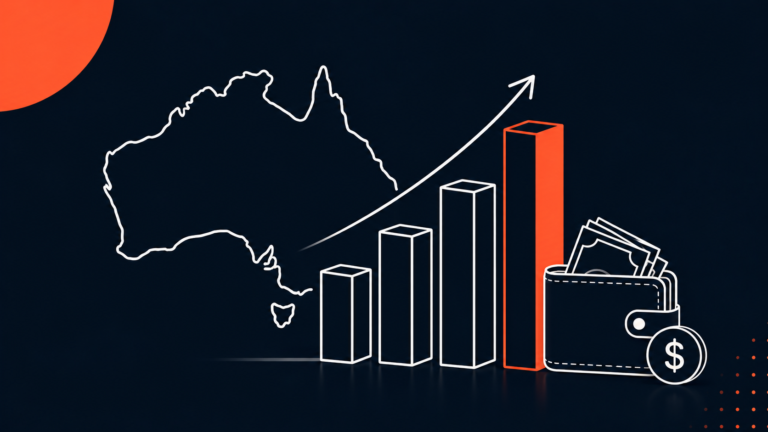
Australia’s national minimum wage is reviewed and set by the Fair Work Commission every year. The current rate, which took effect on 1 July 2025, is $24.95 per hour — and a new rate is due to take effect from 1 July 2026 once the Annual Wage Review 2026 decision is handed down in June.
Here is a complete guide to the minimum wage in Australia for 2026, based on Fair Work Commission determinations and publicly available data.
What Is the Minimum Wage in Australia Right Now?
The national minimum wage is $24.95 per hour, or $948 per week for a full-time 38-hour week — equivalent to approximately $49,296 per year before tax.
This rate has been in effect since 1 July 2025 and applies to employees who are not covered by a modern award or enterprise agreement.
The three figures to know:
| Rate | |
|---|---|
| Per hour | $24.95 |
| Per week (38 hours) | $948.00 |
| Per year (full-time) | ~$49,296 |
Source: Fair Work Commission Annual Wage Review 2025, decision announced 3 June 2025.
How the 2025 Minimum Wage Was Set
The Fair Work Commission approved a 3.5% increase to the national minimum wage and all modern award minimum rates from 1 July 2025, lifting the rate from $24.10 to $24.95 per hour and from $915.90 to $948 per week.
The decision acknowledged that since July 2021, employees reliant on modern award wages had suffered a reduction in the real value of their pay due to the spike in inflation that commenced in 2021 and peaked in late 2022.
The 3.5% increase represented a meaningful catch-up for low-paid workers, though employer groups argued the increase added cost pressure to small businesses still managing post-inflation margins.
Who the Minimum Wage Actually Applies To
The national minimum wage applies specifically to employees who are not covered by a modern award or enterprise agreement. In practice, most minimum wage workers in Australia are actually covered by a modern award — not the bare national minimum.
Approximately 2.4 million employees across Australia have their pay set by a modern award. These workers are covered by industry or occupation-specific awards that set minimum rates, penalty rates, and allowances above the base national minimum.
When the Fair Work Commission sets the national minimum wage, it simultaneously increases all 121 modern award minimum rates by the same percentage. So the July 2025 decision lifted every award minimum rate by 3.5% as well.
Examples of award minimum rates for 2025-26:
| Worker | Award | Approx. Minimum Rate |
|---|---|---|
| Retail Level 1 (adult) | General Retail Industry Award | ~$24.95/hr |
| Retail Level 3 | General Retail Industry Award | ~$28.53/hr |
| Hospitality Level 1 | Hospitality Industry Award | ~$24.95/hr |
| Fast food Level 1 (adult) | Fast Food Industry Award | ~$24.95/hr |
| Aged care (Certificate III) | Aged Care Award | ~$29.00/hr |
Rates are minimum base rates for ordinary hours. Penalty rates, overtime, and allowances apply on top.
Award rates are available in full at fairwork.gov.au.
Casual Loading — What Casuals Are Actually Paid
Casual employees receive a 25% loading on top of the minimum base rate to compensate for the absence of paid leave entitlements, sick leave, and notice protections.
For a casual employee on the national minimum wage:
| Rate | |
|---|---|
| Base rate | $24.95/hr |
| Casual loading (25%) | $6.24/hr |
| Casual minimum rate | $31.19/hr |
This casual loading applies across all awards and the national minimum wage. An employer paying a casual less than $31.19 per hour — where no applicable award sets a higher rate — is underpaying them.
What the Minimum Wage Means After Tax
A full-time worker on the minimum wage earns approximately $49,296 per year before tax. Under Australia’s 2025-26 income tax brackets, this falls into the 16% marginal tax bracket for income above $18,200.
After income tax and the 2% Medicare Levy, the approximate take-home pay is:
| Amount | |
|---|---|
| Gross annual income | $49,296 |
| Estimated income tax | ~$5,282 |
| Medicare Levy (2%) | ~$986 |
| Estimated take-home | ~$43,028/year |
| Weekly take-home | ~$827/week |
This is an estimate only. Your actual take-home depends on whether you claim the tax-free threshold, have a HECS-HELP debt, or are eligible for tax offsets. Use the ATO’s income tax calculator at ato.gov.au for an accurate figure.
For a full breakdown of how income tax works in Australia, see our Australia tax rates 2026 guide.
The 2026 Annual Wage Review — What to Expect From 1 July 2026
The Fair Work Commission is currently conducting the Annual Wage Review 2026. The decision is expected in the first or second week of June 2026, with new rates taking effect from the first full pay period on or after 1 July 2026.
The current national minimum wage is $24.95 per hour, set by the 2024-25 review at a 3.5% increase. The 2026 review will set the rate for 1 July 2026 to 30 June 2027.
Based on submissions to the commission and recent decisions:
| Review year | Increase | New rate |
|---|---|---|
| 2021-22 | 5.2% | $20.33/hr |
| 2022-23 | 5.75% | $21.38/hr |
| 2023-24 | 3.75% | $23.23/hr |
| 2024-25 | 3.5% | $24.95/hr |
| 2025-26 (due July 2026) | Expected 3.0–4.0% | TBC June 2026 |
A 3.0–3.75% range is considered most likely for 2026, based on the pattern of recent decisions and the current CPI tracking around 3.0–3.5% in early 2026.
If the increase lands at 3.5%, the new minimum wage from 1 July 2026 would be approximately $25.82 per hour or $981 per week. This is not confirmed — the FWC decision will be the authoritative figure.
This article will be updated as soon as the June 2026 decision is announced. Bookmark this page or check fairwork.gov.au for the confirmed rate.
Does the Minimum Wage Apply to Everyone?
No. Several categories of workers have different minimum rate arrangements:
Junior employees. Workers under 21 are entitled to a percentage of the adult minimum wage based on age. A 16-year-old is entitled to 36.8% of the adult rate, scaling up to 97.7% at age 20. Full adult rates apply from age 21.
Apprentices and trainees. Apprentices in their first year are paid a percentage of the relevant tradesperson rate. Rates increase with each year of the apprenticeship.
Employees with disability. The Supported Wage System allows employers to pay supported workers a proportional wage based on assessed productive capacity, with a minimum of $3.10 per hour.
Salaried workers above the minimum. Workers on individual contracts or enterprise agreements above the minimum wage floor are not directly affected by the annual review — though many employers use it as a benchmark for annual pay adjustments.
What to Do If You Are Being Underpaid
Wage theft is one of the most common compliance issues in Australia. If you believe you are being paid below the minimum wage or your applicable award rate:
- Check your applicable award at fairwork.
- Calculate the difference between what you were paid and what you should have been paid
- Raise the issue with your employer in writing first
- If unresolved, contact the Fair Work Ombudsman at fairwork.gov.au or call 13 13 94
Employees have six years to claim unpaid wages under the Fair Work Act. The Fair Work Ombudsman can investigate, recover wages, and seek civil penalties against non-compliant employers.
For context on what workers across different industries earn on average, see our average salary in Australia 2026 guide.
Frequently Asked Questions
What is the minimum wage in Australia in 2026?
The current national minimum wage is $24.95 per hour or $948 per week for a 38-hour full-time week, equivalent to approximately $49,296 per year before tax. This rate has been in effect since 1 July 2025. A new rate is expected from 1 July 2026 following the Fair Work Commission’s Annual Wage Review 2026 decision, due in June 2026.
Is $24.95 per hour the minimum for all workers?
No. The $24.95 rate is the national minimum wage floor — it applies to workers not covered by a modern award or enterprise agreement. Most minimum wage workers in Australia are covered by industry awards that set specific minimum rates, which are adjusted by the same percentage as the national minimum wage each year. Award rates are generally at or above the national minimum.
What is the minimum wage for casuals?
Casual employees receive a 25% loading on top of the base rate. For a worker on the national minimum wage, the casual rate is $31.19 per hour. Award-covered casuals receive the same loading on top of their applicable award rate.
When does the minimum wage change in 2026?
The Fair Work Commission is expected to announce the Annual Wage Review 2026 decision in early June 2026. New rates will take effect from the first full pay period on or after 1 July 2026. For most weekly and fortnightly paid employees, this means the new rate applies from around 7 July 2026.
How does Australia’s minimum wage compare internationally?
Australia’s minimum wage is among the highest in the world in absolute terms. At $24.95 per hour (approximately USD $16), it sits above the United Kingdom (approximately £11.44/hr), Canada (varies by province, roughly CAD $17), and significantly above the United States federal minimum of USD $7.25 per hour. Cost of living differences make direct comparisons imperfect, but on a purchasing power basis Australia’s minimum wage is consistently in the top tier of OECD nations.
Does superannuation get paid on top of the minimum wage?
Yes. Employers must contribute 12% of ordinary time earnings to superannuation on top of the minimum wage — this is not included in the $24.95 figure. For a full-time minimum wage worker, that means an employer superannuation contribution of approximately $5,916 per year in addition to gross wages.
Key Takeaways — Australia Minimum Wage 2026
The national minimum wage is $24.95 per hour or $948 per week as of 1 July 2025, set by the Fair Work Commission’s Annual Wage Review 2025 at a 3.5% increase. Most minimum wage workers are covered by a modern award rather than the bare national minimum. Casual employees receive a 25% loading on top of the base rate. A new rate is due from 1 July 2026 — the FWC decision is expected in June 2026, with a 3.0–4.0% increase considered likely. If you believe you are being underpaid, contact the Fair Work Ombudsman at 13 13 94.
General information only. Minimum wage rates are set by the Fair Work Commission and updated annually. Always verify current rates at fairwork.gov.au before making employment or payroll decisions. This article does not constitute legal or financial advice.