Australia’s Rent Crisis in 2026 — What the Data Actually Shows

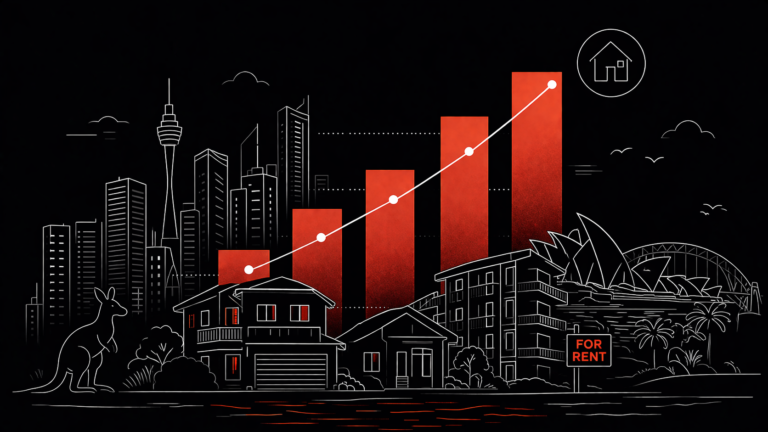
Australian renters are facing some of the toughest conditions in years. Rents have risen sharply, vacancy rates remain near historic lows, and new data suggests the pressure is unlikely to ease significantly in the near term.
Here is what the publicly available data shows about Australia’s rental market in 2026, explained as clearly as I can based on my own research.
Updated May 2026 with the latest Domain, Cotality, SQM Research and ABS data.
How Much Australians Are Paying in Rent in 2026
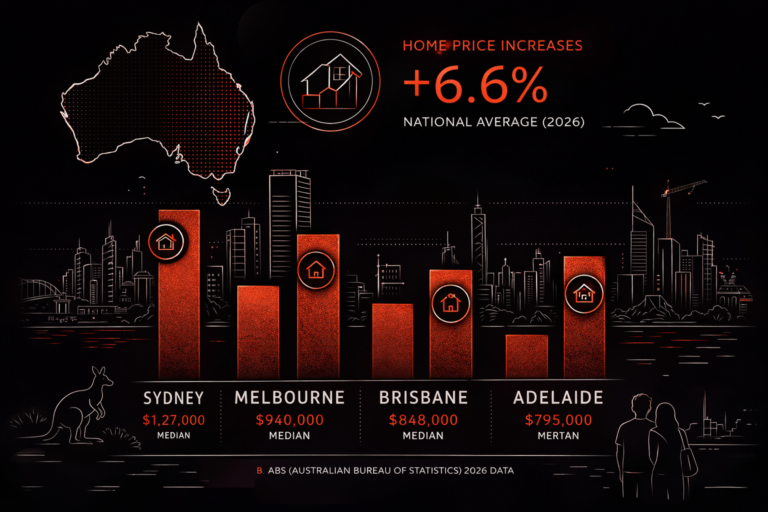
According to Domain’s March 2026 Rent Report, Sydney has the highest median asking rent for houses in Australia at approximately $800 per week — a record high. Melbourne sits at approximately $595 per week for houses, with Canberra at $725 per week and Brisbane in the high $600s. Median weekly rents across all capital cities have now surpassed $700 nationally, according to Cotality data.
For those searching for apartments, the picture is similarly challenging. The average monthly rent for a studio apartment in Australia is around $2,080 per month as of early 2026. A two-bedroom apartment in Sydney’s inner and middle-ring suburbs is above $700 per week in most areas.
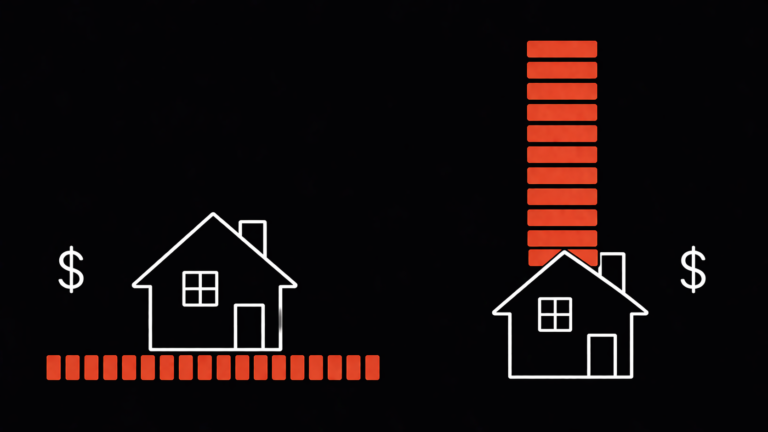
These figures represent a dramatic shift from just five years ago. National rents have surged approximately 44 per cent over the past five years, adding around $204 per week to the median rental value, according to property analytics group Cotality. In the five years prior to 2020, rents rose by just 7.5 per cent or $33 per week.
Rent Prices by State — What the Data Shows
The rental crisis is not uniform across Australia. Some states have seen far larger increases than others. According to Cotality data, Western Australia recorded the biggest rise in asking rents compared to wages over the past five years — rents in WA have jumped 66 per cent compared to wage growth of just 18.5 per cent over the same period. Regional areas have also outpaced capital cities in rent growth over the past 12 months, with regional Western Australia and regional Tasmania recording some of the largest increases.
Current median weekly asking rents by city (Domain Rent Report, March 2026):
| City | Median house rent (per week) | Median unit rent (per week) |
|---|---|---|
| Sydney | ~$800 | ~$750 |
| Canberra | ~$725 | ~$600 |
| Perth | ~$650 | ~$550 |
| Brisbane | High $600s | Mid $600s |
| Melbourne | ~$595 | ~$520 |
| Adelaide | ~$550 | ~$450 |
| Hobart | ~$500 | ~$430 |
| Darwin | ~$600 | ~$480 |
Source: Domain Rent Report March 2026. Figures are median asking rents for new leases, not agreed prices for existing tenancies.
The income required to rent without entering housing stress has surged 51 per cent since 2019 — rising from $74,533 to $112,667 annually across Australia’s capital cities, according to 2026 research by Domain. In Sydney, renters need approximately $135,200 per year to afford median house rent without stress. Melbourne and Hobart sit closer to $100,500.
For context on how housing costs compare to other everyday expenses, see our coverage of Australia’s cost of living.
What the Official ABS Data Shows About Australian Rents
The Australian Bureau of Statistics tracks rental price changes as part of its monthly Consumer Price Index. According to the most recent ABS data at the time of writing:
Rental prices rose 3.8 per cent in the 12 months to February 2026, according to ABS CPI data. The March 2026 CPI — released 29 April 2026 — showed the broader Housing group rising 6.5 per cent annually, with rents remaining a significant contributor. The ABS rental measure reflects what all tenants are paying, including long-term tenants on established leases — which is why it sits below the advertised rent figures discussed below.
The Gap Between Advertised Rents and Official CPI Data
One important nuance in the rental data is the difference between advertised rents and the ABS CPI rental measure. As economist Ben Phillips noted in February 2026, advertised rent growth has been approximately twice what the ABS statistics show in terms of the rental CPI number.
The reason for this gap is straightforward. The ABS measures changes in what all renters — including long-term tenants — are actually paying. Advertised rents only capture what landlords are asking for new tenancies. Since around 2 to 3 per cent of properties change tenants each month, the full impact of higher advertised rents flows through to the CPI measure gradually rather than all at once. For renters who are staying put, increases are typically smaller and slower than for those entering the market fresh.
Why Australian Rents Have Risen So Much
Several structural factors are driving Australia’s rental crisis. Based on publicly available data and research, here is what the evidence points to.
Vacancy Rates Near Historic Lows
Australia’s national rental vacancy rate collapsed to 1.0 per cent in March 2026 according to SQM Research — less than a third of the pre-pandemic average of 3.3 per cent recorded over the decade to 2020. Cotality data for April 2026 recorded vacancy at 1.6 per cent using a different methodology, but both measures point to historically tight conditions. Every capital city recorded a vacancy rate below 1.8 per cent. SQM founder Louis Christopher noted that without a significant increase in housing supply or stabilisation of population growth, rental pressures will remain elevated throughout 2026.
Population Growth and Migration
The return of international migration following the COVID-19 pandemic brought a large wave of new renters into major capital city markets simultaneously. International students returning to universities, skilled migrants arriving under various visa programs, and domestic population movement into major cities all contributed to increased demand for rental properties at a time when supply was constrained.
Insufficient New Housing Supply
Australia is not building enough homes to meet population growth. According to KPMG Australia’s January 2026 residential property market outlook, new dwelling completions would need to be approximately 17 per cent higher than current forecasts to pull rental growth back to normal levels while accommodating expected population growth. Property research group CBRE estimates Australia needs approximately 75,000 new apartments per year to keep pace with demand — but only around 60,000 are expected to be completed annually.
Higher Mortgage Costs Passed to Tenants
The Reserve Bank of Australia has raised the official cash rate three times in 2026 — in February, March and May — bringing it to 4.35 per cent. Each hike is passed on in full to variable rate mortgage holders within weeks. Higher financing costs for property investors tend to flow through to rents over time as landlords seek to maintain returns. The third consecutive hike in May 2026 adds further upward pressure on landlord holding costs at a time when vacancy rates give tenants little negotiating power. For more on how RBA rate decisions affect households, see our RBA interest rates 2026 guide.
What This Means for Renters Right Now
The clearest measure of rental affordability comes from Cotality’s data, which shows the average new renter is now spending 33.4 per cent of their gross income on rent as of early 2026. The standard measure of housing affordability stress is spending more than 30 per cent of income on housing costs — meaning the average new renter in Australia is now beyond that threshold.
Younger Australians are being disproportionately affected. Those entering the rental market for the first time are facing asking rents that have risen at nearly three times the rate of wages over the past five years, according to Cotality research director Tim Lawless. “Tight rental markets, low vacancy rates and limited new supply have combined to push rents sharply higher while incomes have struggled to keep up,” Lawless said in February 2026.
What the Outlook Looks Like for 2026 and Beyond
KPMG Australia projected annual rent growth of approximately 3.5 per cent through 2026 and 2027 — elevated compared to the long-term average but lower than the peak of recent years. Property research group CBRE has taken a more pessimistic view, forecasting a 27 per cent increase in median apartment rents across capital cities by 2030 if construction fails to keep pace with population growth. By 2030, CBRE projects that 83 per cent of two-bedroom apartments across key capital city precincts will have weekly rents exceeding $700, with 36 per cent exceeding $1,000 per week.
Whether those forecasts prove accurate will depend heavily on how quickly new housing supply comes to market, how population growth tracks, and how the RBA’s interest rate decisions affect both construction activity and household budgets.
Domain’s March 2026 Rent Report introduced a new concept to describe the current phase: an affordability ceiling. Dr Nicola Powell, Domain’s Chief Residential Economist, noted that vacancy rates remain at record lows but rent growth is no longer accelerating uniformly — because renters have hit their financial limit. In Sydney, rents have climbed to record highs and then plateaued, with median house rents holding at approximately $800 per week despite extremely low vacancy. Renters are becoming more price sensitive and selective, which is capping how far landlords can push rents even in a historically tight market.
What is clear from the current data is that Australia’s rental market remains under significant structural pressure in 2026, and relief for renters is unlikely to come quickly. For more on how the broader cost of living is affecting Australian households, see our article on Australia’s grocery prices in 2026.
Frequently Asked Questions
How much is rent in Australia in 2026?
Average rents across Australia vary significantly by city and dwelling type. According to CoreLogic data, the national median weekly rent for all dwellings in early 2026 sits at approximately $600–$620 per week. Sydney remains the most expensive capital city rental market, with median weekly rents for houses above $750 and units above $650. Perth and Brisbane have recorded some of the steepest rent increases over the past two years, while Melbourne rents have risen more gradually.
Why have Australian rents risen so much?
The rental crisis in Australia has been driven by three overlapping factors. First, a prolonged period of under-building — Australia did not construct enough new dwellings during and after the COVID period to keep pace with population growth. Second, a surge in net overseas migration from 2022 to 2024, adding hundreds of thousands of new residents to capital city rental markets in a short period. Third, rising mortgage costs have pushed some potential buyers back into the rental market, increasing competition for available stock. Vacancy rates in most capital cities remain near historic lows.
What is a healthy rental vacancy rate in Australia?
A vacancy rate of around 2.5% to 3% is generally considered a balanced rental market — enough supply to give tenants reasonable choice without excess vacant stock that pushes rents down. Most Australian capital cities are currently operating well below this level. Sydney, Melbourne, Brisbane, and Perth have all recorded vacancy rates under 1.5% at various points in 2025 and 2026, giving landlords significant pricing power and leaving tenants with very limited negotiating room.
Is rent cheaper outside capital cities in Australia?
Regional areas became significantly more expensive during the 2020–2022 period as remote work drove demand. Many coastal and tree-change markets — including the Illawarra, Geelong, Sunshine Coast, and Byron Bay region — saw rents rise faster than capital cities during that period. As return-to-office pressure has increased, some regional markets have softened slightly, but most remain meaningfully more expensive than pre-2020 levels. The cheapest rental markets in Australia remain inland regional centres and smaller towns.
What rights do tenants have if their landlord raises the rent?
Rent increase rules are governed by state and territory legislation and vary across Australia. In NSW, landlords can only increase rent once every 12 months and must give 60 days written notice. In Victoria, the same 12-month rule applies with 60 days notice. In Queensland, rent can only be increased once every 12 months with two months notice. In all states, tenants have the right to challenge excessive rent increases through the relevant state tribunal — NCAT in NSW, VCAT in Victoria, and QCAT in Queensland.
Will rent prices go down in Australia in 2026?
Most forecasters do not expect significant rent decreases in 2026. The fundamental issue — insufficient housing supply relative to demand — has not been resolved. While the pace of rent growth has moderated from the extreme rises of 2022 and 2023, rents are not declining in any major capital city market. Federal and state government housing targets are designed to address the supply problem over the medium term, but the pipeline of new dwellings takes years to translate into actual rental stock. The outlook for renters in 2026 remains difficult.
This article is for general informational purposes only and reflects the author’s own research and understanding of publicly available data. It does not constitute financial advice. Updated May 2026. Data sourced from ABS CPI March 2026, Domain Rent Report March 2026, Cotality, SQM Research, and KPMG Australia.