
Petrol prices in Australia in 2026 are among the most volatile and politically charged in a generation. A conflict in the Middle East that escalated on 28 February sent fuel costs surging by as much as 100 cents per litre at certain points in the price cycle — and while a federal government excise cut has delivered some relief from 1 April, the national average for unleaded petrol still sits around 231 cents per litre as of early April 2026, well above the $1.60–$1.80 range Australians were paying at the start of the year.
This article uses official ACCC monitoring data, the Prime Minister’s announcement, and ABS pricing statistics to give you a clear, state-by-state picture of where prices stand — and what is actually inside the price you pay at the bowser.
What’s Happening to Petrol Prices Right Now
Before the Middle East conflict escalated, Australian petrol prices were relatively stable. The ACCC’s own weekly monitoring data shows that on 20 February 2026, average retail unleaded petrol prices in the five largest cities sat between 161 and 189 cents per litre — roughly consistent with the preceding months and well within historical norms.
Within three weeks, that picture changed dramatically.
On 28 February, conflict escalated between the United States, Israel and Iran. International refined fuel benchmark prices — specifically Singapore Mogas 95, the benchmark that sets Australian wholesale petrol costs — rose from around 68 Australian cents per litre in the week to 20 February, to approximately 106 Australian cents per litre by the week ending 11 March 2026 — an increase of 38 cents per litre in three weeks.
Across the five largest cities, daily average retail petrol prices on 11 March were 219.7 cents per litre, an increase of 48.8 cents from 20 February. The price increases continued into late March. NRMA weekly fuel data showed average regular unleaded prices reached 257.8 cents per litre — a rise of 98.3 cents per litre from the low point of the Sydney price cycle on 15 February.
The government responded on 30 March. Following a meeting of National Cabinet, the federal government announced it would halve the fuel excise on petrol and diesel for three months, reducing the cost of fuel by 26.3 cents per litre, effective 1 April 2026 through to 30 June 2026. On 2 April, all state and territory leaders agreed to a further 5.7 cents per litre reduction by forgoing GST revenue, bringing combined excise relief to approximately 32 cents per litre.
By the morning of 2 April, average unleaded prices were at 235.6 cents per litre — 15.2 cents down from the previous Monday. As of 7 April, national average unleaded petrol prices hovered around $2.35 to $2.45 per litre across major capital cities.
State and Capital City Petrol Price Breakdown
The following tables use ACCC official monitoring data, which tracks daily retail and wholesale prices across all eight capital cities. The first table shows where prices were before the conflict (20 February), at the height of the spike (11 March), and the approximate level after the excise cut came into effect.
Regular Unleaded Petrol (ULP 91) — Retail Cents Per Litre
| Capital City | 20 Feb 2026 (pre-conflict) | 11 Mar 2026 (spike) | Change | Early Apr 2026 (post-excise cut, approx.) |
|---|---|---|---|---|
| Sydney | 165.2 | 218.8 | +53.6 | ~210–225 |
| Melbourne | 176.1 | 219.1 | +43.0 | ~210–225 |
| Brisbane | 188.8 | 219.0 | +30.2 | ~215–230 |
| Adelaide | 161.3 | 218.7 | +57.4 | ~205–220 |
| Perth | 163.3 | 222.8 | +59.5 | ~215–230 |
| Canberra (ACT) | 181.2 | 214.8 | +33.6 | ~200–215 |
| Hobart | 165.0 | 215.5 | +50.5 | ~210–225 |
| Darwin | 177.1 | 227.2 | +50.1 | ~240–265 |
Source: ACCC Weekly Fuel Price Monitoring Update, 13 March 2026. Post-excise cut figures are approximated based on the 16.7 cpl average reduction observed on 1 April across the five largest cities, and subsequent market movements to 7 April 2026. Prices remain volatile and subject to daily change.
A few observations from this data worth noting:
Perth recorded the largest absolute retail price increase of any capital city between 20 February and 11 March, rising 59.5 cents per litre. Adelaide was close behind at 57.4 cents. Both cities were at comparatively low levels before the conflict, which amplified the proportional shock.
Brisbane started higher before the conflict at 188.8 cents — reflecting where it sat in its local price cycle — meaning its absolute increase appeared smaller (30.2 cents) even though the underlying cost pressure was the same.
Darwin consistently records the highest prices in the country, a function of its remote location, freight costs, and limited retail competition. In April 2026, Petrolmate data from over 13,360 fuel stations nationally recorded the Northern Territory with the highest average ULP price at 265.1 cents per litre, while the ACT had the lowest at 224.1 cents per litre.
Diesel — Retail Cents Per Litre at the Spike (11 March 2026)
Diesel has been hit harder than petrol during this episode, as the international benchmark for diesel (Singapore Gasoil 10ppm) surged even more sharply than the petrol benchmark.
| Capital City | Diesel Retail 20 Feb (cpl) | Diesel Retail 11 Mar (cpl) | Change |
|---|---|---|---|
| Sydney | 174.3 | 242.1 | +67.8 |
| Melbourne | 178.9 | 237.9 | +59.0 |
| Brisbane | 179.7 | 240.3 | +60.6 |
| Adelaide | 174.7 | 239.2 | +64.5 |
| Perth | 175.6 | 241.3 | +65.7 |
| Canberra | 187.6 | 237.7 | +50.1 |
| Hobart | 184.7 | 238.9 | +54.2 |
| Darwin | 180.5 | 240.8 | +60.3 |
Source: ACCC Weekly Fuel Price Monitoring Update, 13 March 2026.
Across the five largest cities, average wholesale terminal gate diesel prices on 11 March reached 227.6 cents per litre, an increase of 66.2 cents per litre from 20 February. Diesel prices showed less relief from the excise cut than petrol, and some stations were approaching or exceeding $3 per litre in parts of the country in early April. The fuel excise cut applies equally to diesel, but because diesel prices rose more steeply on the wholesale side, the relief is proportionally smaller.
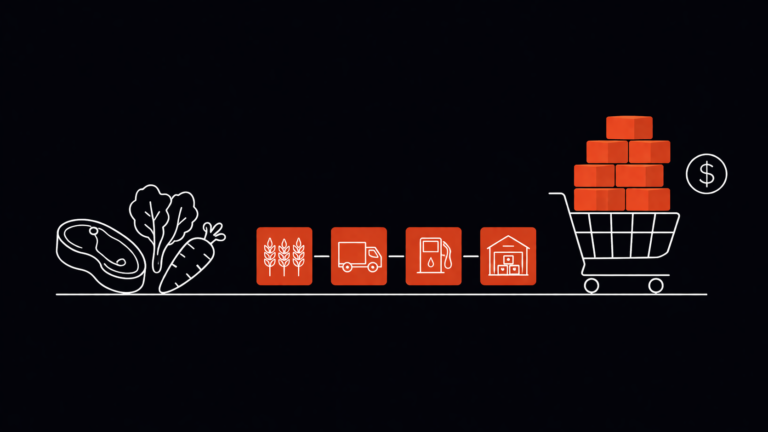
This matters significantly for the broader economy. Diesel powers freight, agriculture, construction, and mining. Elevated diesel costs flow directly into the price of goods on supermarket shelves and into construction costs.
What Makes Up the Price at the Bowser?
To understand why petrol prices are where they are — and what the government can and cannot control — it helps to know what is actually inside the price you pay.
| Component | Approximate Value (April 2026, full excise) | Notes |
|---|---|---|
| International benchmark (Mogas 95) | ~106–120 cpl | Driven by global oil markets and AUD/USD rate |
| Freight, refining, insurance | ~15–25 cpl | Australia imports most refined fuel |
| Fuel excise (full rate) | 52.6 cpl | Now halved to 26.3 cpl until 30 June |
| Retail margin | ~10–20 cpl | Varies by location and brand |
| GST (10%) | Applied to all of the above | Includes tax on the excise itself |
| Total (estimated, pre-cut) | ~$2.40–$2.60 | Before the April 1 excise and GST reduction |
| Total (estimated, post-cut) | ~$2.10–$2.40 | After combined 32c/L relief |
Figures are illustrative approximations based on ACCC component analysis and published wholesale data.
The fuel excise is a flat tax applied to every litre of petrol and diesel sold in Australia, collected from fuel manufacturers and importers but passed through to the retail price. As of early 2026, the excise rate was approximately 53 cents per litre, indexed and adjusted twice yearly in line with CPI. Critically, GST is calculated on the total retail price including the excise, meaning consumers pay tax on top of tax.
The excise represents roughly 20–25% of the total price under normal conditions. At current elevated global benchmark prices, its share is proportionally lower — which is why halving the excise provides significant dollar savings but does not halve the pump price.
Regional Australia: The Hidden Premium
The capital city data above understates the full picture for a large portion of Australia’s population and economy.
Regional, remote, and rural areas consistently pay more for fuel — typically 15 to 40 cents per litre above capital city averages in normal conditions, and more during supply disruptions. The factors are structural:
Transport and freight costs: Fuel must be trucked from major terminals to regional locations, adding significant cost per litre over long distances.
Lower competition: Many regional towns are served by one or two retailers, eliminating the competitive price pressure that keeps margins tight in metro areas.
Supply disruptions: During the February–March 2026 price spike, the ACCC expressed concern about reports regarding diesel availability in regional and rural Australia, hearing concerns from residents, businesses, and primary producers about potential impacts.
As part of the government’s response, 20% of Australia’s petrol and diesel fuel reserves were released, specifically targeted at regional areas.
In northern Queensland towns like Cairns and Townsville, unleaded 91 petrol averaged between $1.95 and $2.20 per litre before the Middle East conflict, while remote parts of Western Australia saw prices above $2.30 per litre even then, reflecting long-haul delivery costs and limited retail options. Those premiums have only widened during the current price shock.
How the Government Has Responded
The scale and speed of the March 2026 price spike triggered a response from the Albanese government that went significantly further than a simple excise cut. The following measures were implemented between late February and early April 2026:
Fuel excise halved (1 April – 30 June 2026): The halving of the fuel excise from 52.6 cents to 26.3 cents per litre reduces the cost of a 65-litre tank by nearly $19.
GST relief (from 2 April): All state and territory governments agreed to forgo a portion of the GST windfall generated by higher pump prices, delivering an additional approximately 5.7 cents per litre reduction. Combined with the excise cut, total relief is approximately 32 cents per litre.
ACCC enforcement and monitoring: New legislation doubled maximum fines for companies found guilty of anti-competitive conduct or misleading consumers about fuel costs, to $100 million per offence. The ACCC is monitoring fuel prices daily in capital cities and more than 190 regional locations.
Strategic reserve release: 20% of Australia’s strategic fuel reserves were released, targeted at regional areas experiencing supply constraints.
Singapore supply agreement: The federal government secured a supply agreement with Singapore to maintain shipments of refined fuel to Australia.
Heavy Vehicle Road User Charge: The Heavy Vehicle Road User Charge was reduced to zero for three months to help the freight and trucking sector, with the next scheduled increase also deferred by six months.
On 1 April, across the five largest cities, daily average retail petrol prices were 16.7 cents per litre lower and daily average retail diesel prices were 15.0 cents per litre lower than the previous day, following the excise cut. However, the ACCC expressed concern that some fuel retailers increased their retail fuel price soon after the government initially announced the excise reduction, before then cutting prices, potentially to obscure a failure to fully pass on the cut.
How Australian Petrol Prices Are Structured: The Price Cycle
In the five largest cities — Sydney, Melbourne, Brisbane, Adelaide, and Perth — petrol prices do not stay constant. They move in regular price cycles that the ACCC has monitored for many years.
A typical cycle sees prices rise sharply over one to three days, then fall gradually over the following one to two weeks before rising again. These cycles exist because in the five largest cities, retail petrol prices move up and down in regular patterns driven by the pricing behaviour of major fuel retailers.
The practical implication for motorists: the same petrol station in Sydney can charge 30–40 cents more per litre on the top of the cycle than at the bottom, even with no change in the underlying wholesale price. Filling up on the downswing — typically mid-week in most cities — represents a meaningful saving. Historically, filling up on a Thursday rather than a Sunday has saved around 15 cents per litre, or approximately $8 on a 55-litre tank.
Hobart, Darwin, and Canberra do not follow the same cyclical pattern and typically maintain more stable (though often higher) prices relative to major eastern seaboard cities.
The Global Driver: Oil Markets and the AUD
Australian retail fuel prices are largely determined by movements in international benchmark refined fuel prices, which are driven by international crude oil prices, and the AUD/USD exchange rate.
As of early April 2026, Brent crude was trading near US$109 per barrel — significantly above the approximately US$73 per barrel recorded in the week to 20 February. A weaker Australian dollar amplifies this effect: when the AUD falls against the USD, the cost of imported refined fuel rises in Australian dollar terms even if the USD oil price stays flat.
Australia imports nearly all of its refined petrol. The country’s last oil refinery — Ampol’s Lytton facility in Brisbane — produces diesel primarily and cannot meet national demand for refined fuels on its own. This structural import dependence means Australian pump prices are directly and quickly exposed to international benchmark movements.
For context on how fuel costs feed into broader inflation and the RBA’s policy response, see our full coverage of RBA interest rate decisions and their economic impact in 2026.
State-by-State Fuel Monitoring Tools
Each state and territory government operates or supports a fuel price transparency tool that allows motorists to find the cheapest nearby prices in real time:
| State / Territory | Tool | Access |
|---|---|---|
| NSW | FuelCheck | fuelcheck.nsw.gov.au |
| VIC | Compare the Market / VicFuel | vic.gov.au |
| QLD | Queensland Fuel Price Reporting | business.qld.gov.au |
| WA | FuelWatch | fuelwatch.wa.gov.au |
| SA | FuelPrice SA | sa.gov.au |
| NT | MyFuel NT | ntc.nt.gov.au |
| TAS | TasFuel | transport.tas.gov.au |
| ACT | ACT Fuel Price App | act.gov.au |
These tools pull real-time or daily data from reporting obligations imposed on fuel retailers in each jurisdiction. During the March–April 2026 price spike, the NRMA reported that motorists in NSW using FuelCheck were finding price differences of up to 30 cents per litre between nearby stations. Using these tools before you fill up is the single most effective action available to individual consumers.
What Happens When the Excise Cut Expires?
The fuel excise cut runs until 30 June 2026. Unless extended, the excise reverts to 52.6 cents per litre from 1 July — adding approximately 26.3 cents per litre back to the retail price overnight.
The critical question is where international oil prices will be by then. With Brent crude above US$107 per barrel, the underlying commodity price before any tax is already significantly higher than normal. If the geopolitical situation in the Middle East remains unresolved and the Strait of Hormuz remains disrupted, July 2026 could see petrol prices spike again as the excise cut expires.
The cost to the federal budget of the three-month excise cut is estimated at approximately $3 billion, based on Australia consuming roughly 18 billion litres of transport fuels annually. Whether to extend the cut — at that fiscal cost, and against a background of already elevated inflation — is a live policy debate. For context on broader cost-of-living pressures on Australian households, see our analysis of electricity prices across Australia in 2026.
FAQ
What is the average petrol price in Australia today (April 2026)?
Following the government’s 32 cents per litre excise and GST cut from 1 April, national average unleaded petrol prices are approximately $2.30–$2.45 per litre in major capital cities as of early April 2026, according to ACCC monitoring and Petrolmate data. Prices remain volatile and are updated daily. Use your state’s fuel price app for real-time figures near you.
Which state has the cheapest petrol in Australia in 2026?
Based on Petrolmate’s April 2026 data from over 13,000 stations, the ACT recorded the lowest average ULP price at 224.1 cents per litre. Adelaide and Sydney also tend to be more competitive due to intense retail rivalry. However, the price cycle means averages vary significantly day to day within each city.
Why is petrol so expensive in 2026?
The primary driver is the escalation of the Middle East conflict on 28 February 2026, which disrupted global oil supply, particularly through the Strait of Hormuz. The Singapore Mogas 95 benchmark — which determines Australian wholesale prices — rose approximately 38 cents per litre in three weeks. Australia’s structural dependence on imported refined fuel means these global movements pass directly to the pump.
What is the fuel excise in Australia in 2026?
The standard fuel excise rate is 52.6 cents per litre, indexed twice yearly in line with CPI. From 1 April to 30 June 2026, the rate has been temporarily halved to 26.3 cents per litre by the federal government. An additional 5.7 cents per litre of GST relief was agreed by all states and territories on 2 April, bringing total tax relief to approximately 32 cents per litre.
How can I find the cheapest petrol near me?
Use your state or territory’s official fuel price monitoring tool: FuelCheck (NSW), FuelWatch (WA), or the equivalent in your state (see the table above). The ACCC also operates a national monitoring portal that tracks prices across more than 190 regional locations as well as all capital cities. Filling up mid-week during the low point of your city’s price cycle can save $8–$15 per tank compared with filling at the cycle’s peak.
Conclusion
Petrol prices across Australia in 2026 are at multi-year highs, driven by a Middle East conflict that has reshaped global energy markets almost overnight. The federal government’s combined 32 cents per litre excise and GST cut has provided meaningful relief at the bowser from April, but prices remain well above pre-conflict levels and are expected to stay elevated for as long as global oil market disruption continues. For Australian motorists — particularly those in regional areas — the data confirms that where you live, when you fill up, and which tools you use to shop around have never mattered more.
This article is for informational purposes only and does not constitute financial, legal, or migration advice. Data is sourced from publicly available Australian government sources and is accurate at time of publication. Fuel prices change daily. Please consult official state fuel price tools or the ACCC fuel monitoring portal for the most current figures specific to your location.