
If you are moving to Australia, planning a career change, or just trying to work out whether your salary is enough — the first question is always the same: how much does it cost to live in Australia in 2026?
The honest answer is that it depends heavily on which city you live in, whether you rent or own, and how you spend. But the data gives us clear numbers to work with.
The Bottom Line — What Australians Actually Spend Each Month
According to ABS Household Expenditure Survey data, the average Australian household spends approximately $5,200 per month across all categories.
Breaking that down by household type:
| Household type | Monthly cost (all cities average) |
|---|---|
| Single adult | $3,500 — $4,200 |
| Couple, no children | $4,500 — $5,500 |
| Family of four | $6,500 — $8,000 |
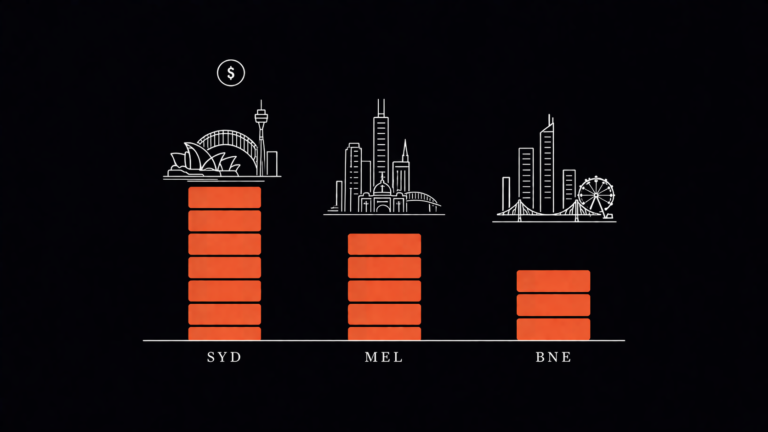
Sydney and Melbourne households spend approximately 15 to 25 per cent more than the national average. Regional areas and smaller capitals like Adelaide and Hobart sit meaningfully below it.
These figures include rent, groceries, transport, utilities, and a moderate social budget. They do not include mortgage repayments, private health insurance premiums, or savings contributions.
The Biggest Cost — Housing
Housing is the dominant expense for most Australians, typically consuming 30 to 40 per cent of household budgets in major cities. It is also where the cost of living in Australia is genuinely expensive by global standards.
National median rent: approximately $665 per week in 2025, rising to an estimated $685 per week in 2026.
By city:
| City | Median weekly rent (unit) | Monthly cost |
|---|---|---|
| Sydney | $750 | ~$3,250 |
| Melbourne | $580 | ~$2,513 |
| Brisbane | $620 | ~$2,687 |
| Adelaide | $480 | ~$2,080 |
| Perth | $620 | ~$2,687 |
Shared housing cuts costs substantially — a bedroom in a shared Sydney apartment averages approximately $350 per week, compared to $750 for a full unit.
For buyers, median house prices in 2026 range from $1,759,909 in Sydney down to approximately $900,000 in Adelaide. Mortgage repayments on a median Sydney house at current interest rates run approximately $4,000 to $5,500 per month. For the full housing picture, see our rent prices guide and our house prices guide.
Groceries — What a Weekly Shop Actually Costs
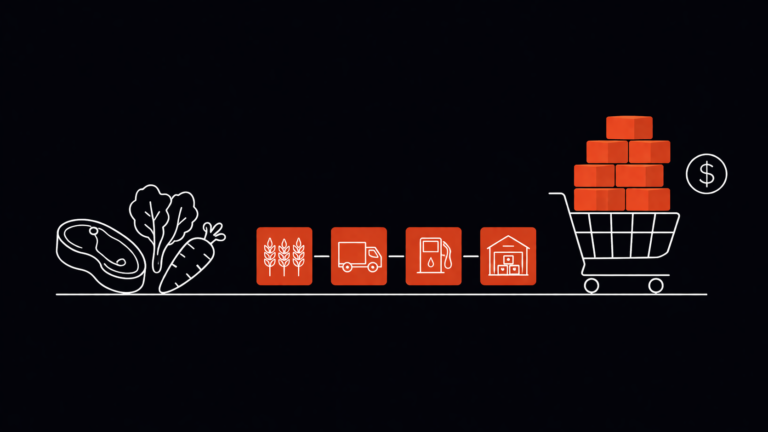
Grocery prices are broadly consistent across Australia’s major cities because the major supermarket chains — Coles, Woolworths, and Aldi — operate near-national pricing.
A weekly grocery bill for one person at a major supermarket runs approximately $150 to $200. For a family of four, expect $300 to $450 per week depending on diet and shopping habits.
Aldi reduces the weekly bill by approximately 20 to 30 per cent compared to Coles or Woolworths for equivalent items.
Monthly grocery costs:
- Single person: $400 to $600
- Family of four: $800 to $1,200
Food inflation remains a pressure point in 2026 — beef is up 13.5 per cent, lamb is up 12.9 per cent, and overall food CPI sits at 3.1 per cent year-on-year to February 2026. For the full breakdown, see our grocery prices guide.
Transport — Where Brisbane Wins by a Country Mile
Transport costs vary dramatically depending on which city you live in and whether you drive or use public transport.
Brisbane: The Queensland Government’s 50-cent fare cap — extended into 2026 — makes Brisbane’s public transport cost approximately $20 to $30 per month for a regular commuter. This is the single biggest transport cost advantage of any Australian capital city.
Sydney: The weekly Opal cap of $50 puts monthly public transport costs at approximately $200 to $217 for five-day commuters.
Melbourne: The daily cap of $11.40 (and $8.00 on weekends from January 2026) puts monthly costs at approximately $150 to $180.
Car ownership adds significantly to costs. Running a small car in Australia — including loan repayments, fuel, insurance, registration, and maintenance — costs approximately $15,000 to $18,000 per year or roughly $1,250 to $1,500 per month. For most city dwellers, relying on public transport is far more economical.
Petrol currently sits at approximately $1.80 per litre nationally, with the fuel excise relief from April 2026 providing some short-term relief. For more context see our petrol prices guide.
Utilities — Electricity, Gas and Internet
A typical apartment in a major Australian city pays approximately $300 to $400 per month for electricity, gas, and internet combined.
Electricity bills jumped sharply in 2026 as government energy rebates expired — the ABS recorded a 37 per cent out-of-pocket increase in electricity costs to February 2026. The underlying electricity price rise was 4.9 per cent, but the loss of rebate subsidy made the household impact far larger. Government energy rebates of approximately $150 are in place to partially offset costs for eligible households.
Internet: A standard NBN plan runs approximately $60 to $100 per month depending on speed tier and provider.
Healthcare — Medicare Plus the Gap
Australia’s Medicare system covers a significant portion of healthcare costs for citizens and permanent residents — but not everything.
Bulk-billed GP visits: Free for most Australians at bulk-billing practices. However, bulk-billing availability has declined in major cities in 2026, with some GPs charging out-of-pocket gaps of $20 to $50 per visit.
Private health insurance: Optional but widely held. Premiums for hospital and extras cover average approximately $150 to $300 per person per month depending on age and cover level. The Australian Government’s private health insurance rebate reduces premiums for lower and middle-income earners.
Dental and optical: Not covered by Medicare. A standard dental check-up and clean costs approximately $200 to $350. Glasses or contact lenses from a private optometrist run approximately $200 to $600 depending on prescription complexity.
For a full breakdown of healthcare costs, see our healthcare costs guide.
What Salary Do You Need to Live Comfortably?
Based on 2026 cost of living data, here are the approximate net after-tax income levels needed for a comfortable lifestyle — meaning rent covered, bills paid, groceries bought, some dining out, and a small savings buffer:
| City | Single person | Couple | Family of four |
|---|---|---|---|
| Sydney | $80,000 — $100,000/yr net | $120,000 — $150,000/yr net | $160,000+/yr net |
| Melbourne | $70,000 — $90,000/yr net | $110,000 — $130,000/yr net | $140,000+/yr net |
| Brisbane | $65,000 — $80,000/yr net | $100,000 — $120,000/yr net | $130,000+/yr net |
| Adelaide | $55,000 — $70,000/yr net | $90,000 — $110,000/yr net | $120,000+/yr net |
These are net figures — after income tax. Australia’s median full-time adult earnings in 2026 sit at approximately $90,000 gross, which translates to roughly $67,000 to $70,000 net after tax. That income is comfortable in Brisbane or Adelaide for a single person, tight in Melbourne, and genuinely stretched in Sydney.
For context on how Australian wages compare to the rising cost of living, see our wages guide.
Costs That Catch People Out
Childcare: Australia has some of the most expensive childcare in the OECD. Before the Child Care Subsidy, long day care averages approximately $129 per day — around $2,800 per month for full-time care. The CCS reduces this significantly for eligible families but the subsidy is means-tested. For the full picture, see our childcare costs guide.
Insurance: Home and contents, car, and life insurance premiums have risen sharply. A comprehensive car insurance policy runs approximately $1,200 to $2,000 per year. Home and contents for a Sydney apartment averages $1,500 to $3,000 per year depending on suburb and insurer.
Education: Government schools are nominally free but voluntary contributions, uniforms, excursions, and school fees add up to approximately $440 per year for primary and $978 per year for secondary students on average. Private school fees range from $10,000 to $40,000+ per year.
The One Number to Remember
If you are planning to move to Australia and want a single planning figure, use this:
$3,500 to $4,500 per month for a single person in a major city including rent. Lower in Adelaide or a regional area. Higher in Sydney.
That is approximately $42,000 to $54,000 per year just to cover the basics. A comfortable lifestyle with savings requires more — typically $65,000 to $100,000 net depending on city and household size.
Australia is not cheap. But wages are competitive, superannuation builds long-term wealth, and the quality of life rankings — Australia placed 10th in the 2025 World Happiness Report — consistently reflect well on the trade-off.
This article is for general informational purposes only and reflects the author’s own research and understanding of publicly available data. Cost of living figures are estimates based on median data and vary significantly by location, lifestyle, and household size. Always verify current figures with the ABS, Domain, and Numbeo.