
The RBA cut interest rates three times in 2025, from 4.35 per cent down to 3.6 per cent. Hundreds of thousands of Australian mortgage holders finally caught a break.
Then in February 2026, the RBA hiked again. Then again in March. The cash rate now sits at 4.10 per cent — and the number of households in mortgage stress is climbing fast.
The Numbers Right Now
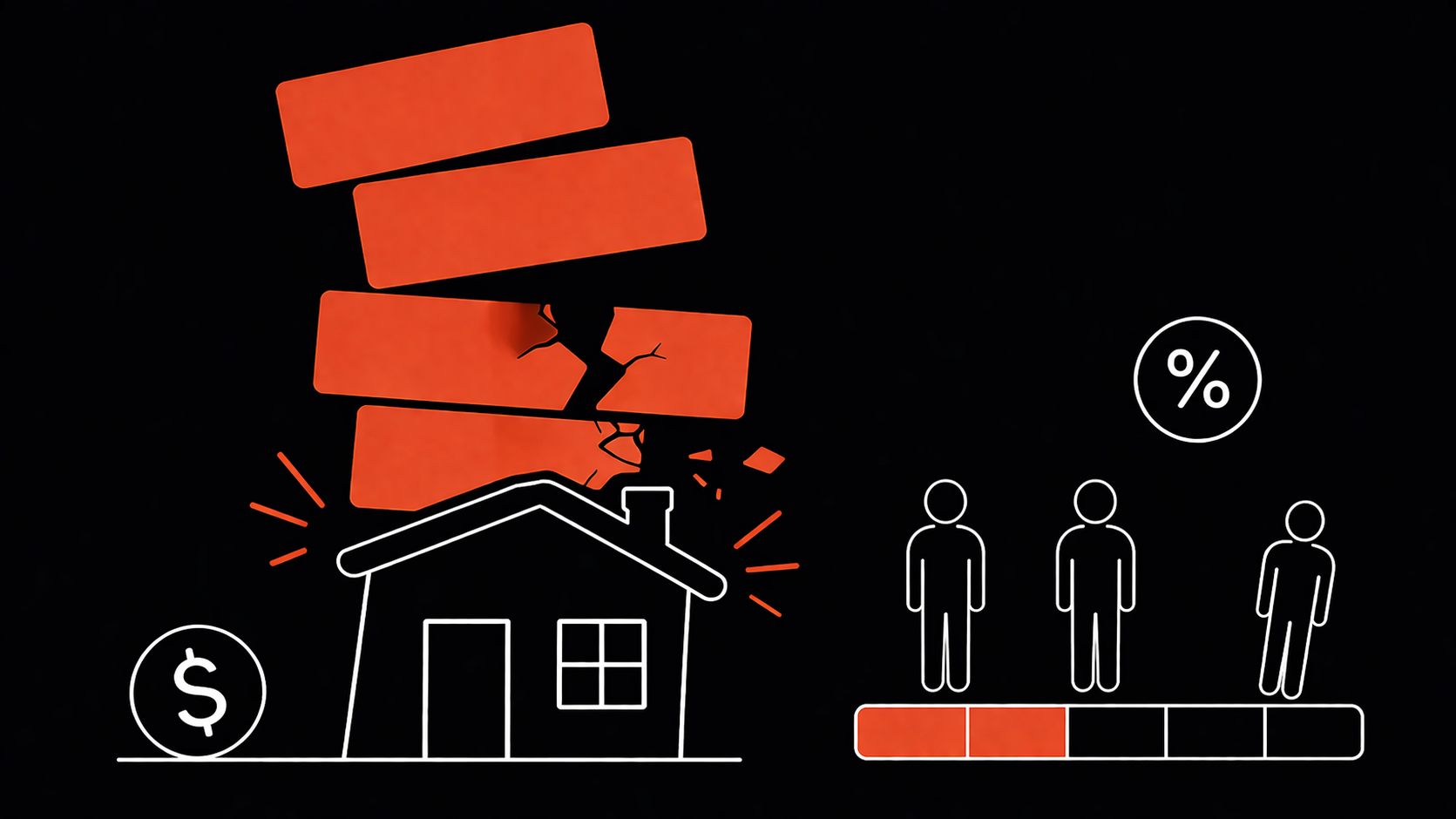
According to Roy Morgan Research, 24.9 per cent of Australian mortgage holders — approximately 1.317 million people — were considered “at risk” of mortgage stress in February 2026. That figure rose after the March hike to an estimated 26.6 per cent, or 1.41 million people.
To put that in context: roughly 1 in 4 Australian mortgage holders is currently struggling to meet repayments.
A further 789,000 households are classified as “extremely at risk” — meaning even paying interest-only would consume too large a share of their income.
How Much More Are Households Paying?
Canstar modelling based on Westpac forecasts puts the extra monthly cost of the 2026 rate hikes at:
| Loan size | Extra monthly repayment |
|---|---|
| $600,000 | +$457/month |
| $800,000 | +$609/month |
| $1,000,000 | +$762/month |
These figures assume three hikes across 2026. The February and March hikes have already happened. If the RBA raises again in May — which major banks including Westpac, NAB, CBA, and ANZ are forecasting — mortgage stress would hit an estimated 30.3 per cent, or 1.6 million households.
Why Is This Happening Now?
Inflation was supposed to keep falling. It hit a low of 1.9 per cent in June 2025 — comfortably within the RBA’s 2 to 3 per cent target. Rate cuts followed.
But then inflation doubled. By January 2026, the ABS recorded headline CPI at 3.8 per cent — driven by rising energy costs, food inflation, and the Middle East conflict pushing petrol prices sharply higher. The RBA had no choice but to reverse course.
For mortgage holders, that reversal wiped out months of relief in two board meetings.
The Biggest Risk Is Not the Rate — It’s Your Job
Roy Morgan’s analysis makes one thing clear: interest rates are not the primary driver of mortgage stress. Job loss is.
Over one in five Australian workers are currently unemployed or underemployed — approximately 3.34 million people. For a household already stretched thin by a higher mortgage rate, losing one income source is what tips a tight budget into genuine crisis.
If you are feeling the pressure, contact your lender before you miss a payment. Lenders are required by law to offer hardship arrangements. The National Debt Helpline (1800 007 007) provides free financial counselling. And for anyone questioning whether renting versus owning still makes financial sense in 2026, see our rent vs house prices data.
What Could Change
The RBA has stressed it is “data dependent.” If inflation falls back toward 3 per cent by mid-2026, the case for further hikes weakens. If the Middle East conflict pushes energy prices still higher, the case for more hikes strengthens.
The honest position for mortgage holders right now: plan as if rates stay where they are, and treat any cut as a bonus.
For the full picture of what rising rates mean for housing costs, see our house prices guide and our rent prices guide.
General information only. Source: Roy Morgan Research, RBA, ABS, Canstar. Always seek financial advice for your specific situation.