Subclass 494 Visa Australia 2026 — Skilled Employer Sponsored Regional Visa Requirements, Costs and PR Pathway

The subclass 494 visa — officially the Skilled Employer Sponsored Regional (Provisional) visa — is Australia’s primary pathway for skilled workers to live and work in regional Australia under employer sponsorship. Introduced on 16 November 2019 to replace the RSMS subclass 187 Direct Entry stream, it provides a five-year provisional visa with a clear pathway to permanent residency through the subclass 191 visa after three years.
Here is a complete guide to the subclass 494 visa in Australia for 2026, based on publicly available information from the Department of Home Affairs.
What Is the Subclass 494 Visa?
The subclass 494 is a five-year provisional employer-sponsored visa that allows skilled overseas workers to address genuine labour shortages in regional Australia. It enables regional employers to sponsor workers in occupations where they cannot find suitably skilled Australian citizens or permanent residents.
The visa is provisional — it does not grant permanent residency immediately. However, it provides a structured pathway to permanent residency through the subclass 191 visa after the holder has lived and worked in regional Australia for at least three years.
With 10,000 places allocated per year, the 494 is one of the most significant regional skilled migration pathways available to overseas workers and regional employers in 2026.
The Three Streams
The subclass 494 visa operates across three streams:
Employer Sponsored stream — The most common stream. Allows regional employers who are approved Standard Business Sponsors to nominate skilled workers in occupations on the MLTSSL or ROL. Requires Regional Certifying Body (RCB) advice and Labour Market Testing.
Labour Agreement stream — For employers who have a formal Labour Agreement with the Australian Government, including Designated Area Migration Agreements (DAMAs). Allows concessions to standard requirements in some cases. Processing time is faster — 90% of applications processed within 6 months.
Subsequent Entrant stream — For family members of a current subclass 494 holder who are applying separately to join the primary visa holder in Australia.
What Is a Regional Area?
For the subclass 494 visa, regional Australia means everywhere except the metropolitan areas of Sydney, Melbourne, and Brisbane. This is broader than many applicants expect.
The following cities and areas are classified as regional for 494 purposes:
- Perth and the rest of Western Australia
- Adelaide and South Australia
- Hobart and Tasmania
- Canberra and the ACT
- Darwin and the Northern Territory
- Gold Coast, Sunshine Coast, Geelong, Wollongong, Newcastle, and all other regional cities and towns
- All rural and remote areas of all states and territories
If you are considering working in Perth, Adelaide, or the Gold Coast, you are in a designated regional area and the subclass 494 applies.
Applicant Requirements — Employer Sponsored Stream
To be granted a subclass 494 visa under the Employer Sponsored stream, you must meet all of the following:
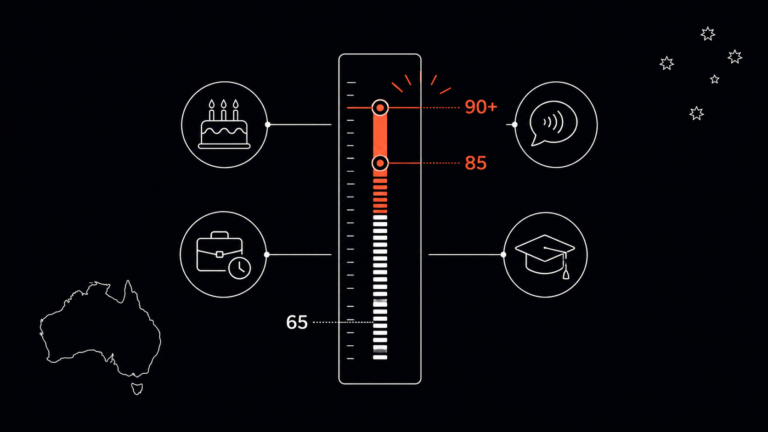
Age: Under 45 years at the time of visa application. Some exemptions apply — check with the Department of Home Affairs for your specific circumstances.
English language: Minimum Competent English — equivalent to IELTS 6.0 in each of the four bands (Listening, Reading, Writing, Speaking). Acceptable tests include IELTS, PTE Academic, TOEFL iBT, OET, and Cambridge C1 Advanced.
Work experience: At least 3 years full-time relevant work experience in your nominated occupation, at the skill level required for that occupation. This experience must generally have been gained within the last 5 years but does not need to be continuous. Part-time work may be considered on a pro-rata basis — casual work is generally not counted.
Skills assessment: A positive skills assessment from the relevant assessing authority for your nominated occupation is required. For the skills assessment process, see our skills assessment guide.
Occupation: Your nominated occupation must be on the Medium and Long-term Strategic Skills List (MLTSSL) or the Regional Occupation List (ROL). The Core Skills Occupation List (CSOL) — used for the subclass 482 — does not apply to the 494. See our subclass 482 guide for a comparison.
Health and character: You and all family members included in the application must meet Australian health and character requirements.
Family members over 18: Must demonstrate at least Functional English ability.
Employer Requirements — Employer Sponsored Stream
The sponsoring employer must meet the following requirements:
- Be located in a designated regional area of Australia
- Be an approved Standard Business Sponsor (or apply to become one — sponsorship approval costs $420 and lasts 5 years)
- Obtain a Regional Certifying Body (RCB) letter — the RCB provides advice to the Department confirming that the proposed salary meets the Annual Market Salary Rate (AMSR) for the occupation in that location
- Conduct mandatory Labour Market Testing (LMT) — demonstrate genuine attempts to fill the position with Australian workers before seeking overseas talent
- Pay the position at or above the Annual Market Salary Rate (AMSR) — the minimum is currently $76,515 (the Core Skills Income Threshold), though the actual AMSR for your specific occupation and location may be higher
- Pay the Skilling Australians Fund (SAF) levy — a one-off payment of $3,000 for businesses with annual turnover under $10 million, or $5,000 for businesses with turnover of $10 million or more. This levy must be paid by the employer — it is illegal to transfer this cost to the sponsored worker or any third party
The Three-Step Application Process
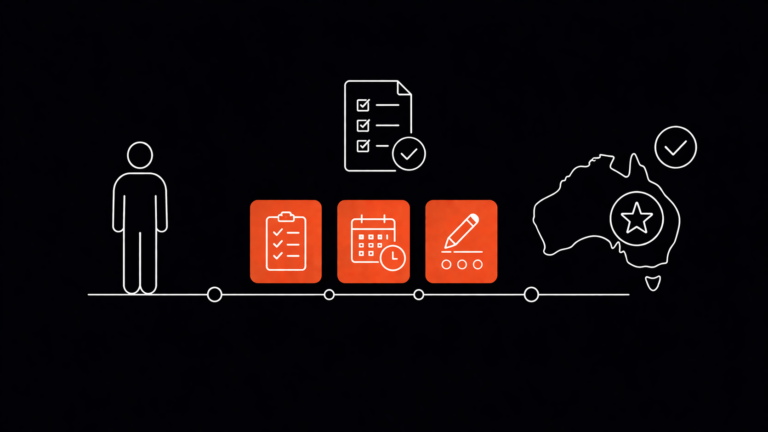
The subclass 494 Employer Sponsored stream involves three sequential steps:
Step 1 — Business Sponsorship The employer applies to become an approved Standard Business Sponsor (SBS) with the Department of Home Affairs. Businesses that already hold a current Standard Business Sponsorship from a subclass 482 nomination do not need to apply again.
Step 2 — Nomination The employer lodges a nomination application identifying the position, the occupation, the nominated worker, and the regional location. The nomination must include RCB certification and evidence of Labour Market Testing. The SAF levy is paid at this stage. There is no nomination application charge for the Department of Home Affairs (unlike the 482, which charges $540 per nomination — though for 494 a $540 charge applies for businesses not located in a designated regional area).
Step 3 — Visa Application Once the nomination is approved, the applicant lodges the visa application through ImmiAccount. This is where health examinations, character checks, and English evidence are submitted.
Costs — What You and Your Employer Pay
Employer costs:
- Sponsorship application: $420 (if not already an approved sponsor)
- SAF levy: $3,000 (turnover under $10M) or $5,000 (turnover over $10M)
- Nomination application charge: $0 (nil) for businesses in designated regional areas
Applicant costs:
- Primary applicant visa application charge — check the Department of Home Affairs Visa Pricing Estimator for current fees as these are updated annually
- Second visa application charge: $4,890 applies to any adult applicant (18 or over) who has not been assessed as having Functional English — this is payable before the visa can be granted
RCB assessment fees are set by each Regional Certifying Body individually — for example, some RCBs charge approximately $800 for a standard assessment. Check with the relevant RCB for your region.
Visa Conditions After Grant
Once granted, the subclass 494 visa imposes strict conditions:
- Condition 8579: You must live, work, and study only in regional Australia
- You must commence employment within 90 days of the visa grant date
- You must work only in your nominated occupation and only for your sponsoring employer (or an associated entity)
- The visa is valid for up to 5 years
Changing employers: As of 1 July 2024, a 180-day grace period applies between employer sponsors. If your employment ends, you have 180 days to find a new regional employer to lodge a new nomination before your visa is affected.
Medicare: You are eligible for Medicare on the subclass 494 visa. Private health insurance is not required.
Other visa restrictions: You generally cannot apply for other skilled PR visas (including subclass 189, 190) or the subclass 820/801 Partner visa for three years while holding a subclass 494, unless exceptional circumstances apply. See our subclass 820/801 partner visa guide for more on partner visa options.
Processing Times
The subclass 494 has longer processing times than the subclass 482 due to the additional RCB and Labour Market Testing requirements:
| Stream | 90% of applications processed within |
|---|---|
| Employer Sponsored stream | 14 months |
| Labour Agreement stream | 6 months |
Processing times start once the nomination is approved and the visa application is complete. Submitting a decision-ready application with all required documents at lodgement significantly reduces delays. Accredited sponsors receive priority processing.
Pathway to Permanent Residency — Subclass 191
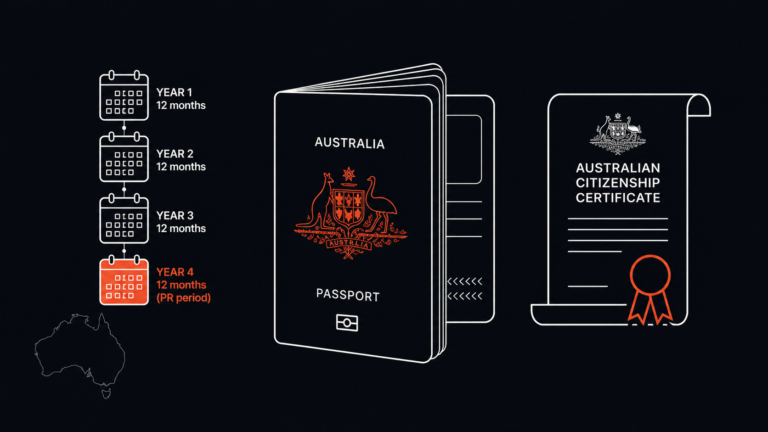
The subclass 494 provides a direct pathway to permanent residency through the Subclass 191 Permanent Residence (Skilled Regional) visa. To be eligible for the 191 you must:
- Have held a subclass 494 visa for at least 3 years
- Have lived and worked in a designated regional area for those 3 years
- Have met a minimum taxable income of $53,900 per year for each of the 3 years (this threshold is indexed annually)
- Have complied with all subclass 494 visa conditions
- Meet health and character requirements
Importantly, you do not need a second employer nomination to apply for the subclass 191 — the PR pathway is applicant-driven once you meet the criteria. Your partner can also be the primary applicant for the 191 visa if they can demonstrate the income requirements.
Subclass 494 vs Subclass 482 — Key Differences
| Feature | Subclass 494 | Subclass 482 |
|---|---|---|
| Occupation lists | MLTSSL + ROL | CSOL (456 occupations) |
| Location requirement | Regional Australia only | Anywhere in Australia |
| Work experience required | 3 years | 2 years |
| Age limit | Under 45 | Under 45 (Core Skills) |
| Visa duration | 5 years | Up to 4 years |
| PR pathway | SC 191 after 3 years | SC 186 after 2 years |
| RCB required | Yes | No |
| SAF levy | $3,000 / $5,000 (one stage) | $1,200–$1,800/year |
The 494 is more cost-effective for employers in the long run — it requires only one SAF levy payment versus the annual SAF payments under the 482-to-186 pathway. For employers in regional areas, it is often the preferred option.
Key Takeaways — Subclass 494 Visa Australia 2026
The subclass 494 is a five-year provisional visa for skilled workers in regional Australia, with 10,000 places per year. You need to be under 45, have Competent English, hold a positive skills assessment, and have at least 3 years full-time work experience. Your employer must be in a regional area, obtain RCB advice, and pay the SAF levy. Perth and Gold Coast are regional for this visa. After 3 years, you can apply for permanent residency through the subclass 191 without a second employer nomination. Processing takes up to 14 months for the Employer Sponsored stream.
For more on how this fits into Australia’s broader migration program, see our Australia migration program guide and our subclass 191 permanent residency guide for the PR step that follows.
This article is for general informational purposes only and reflects the author’s own research and understanding of publicly available information from the Department of Home Affairs. Visa requirements, fees, and processing times change regularly. Always verify current requirements at immi.homeaffairs.gov.au or through a registered migration agent.