
Insurance prices rising across Australia in 2026 are hitting households from multiple directions — home and contents, motor vehicle, and private health cover are all more expensive than they were 12 months ago. If your renewal notice looks worse every year, you are not imagining it, and the reasons go well beyond simple inflation.
The Short Answer: Multiple Cost Pressures Are Stacking Up
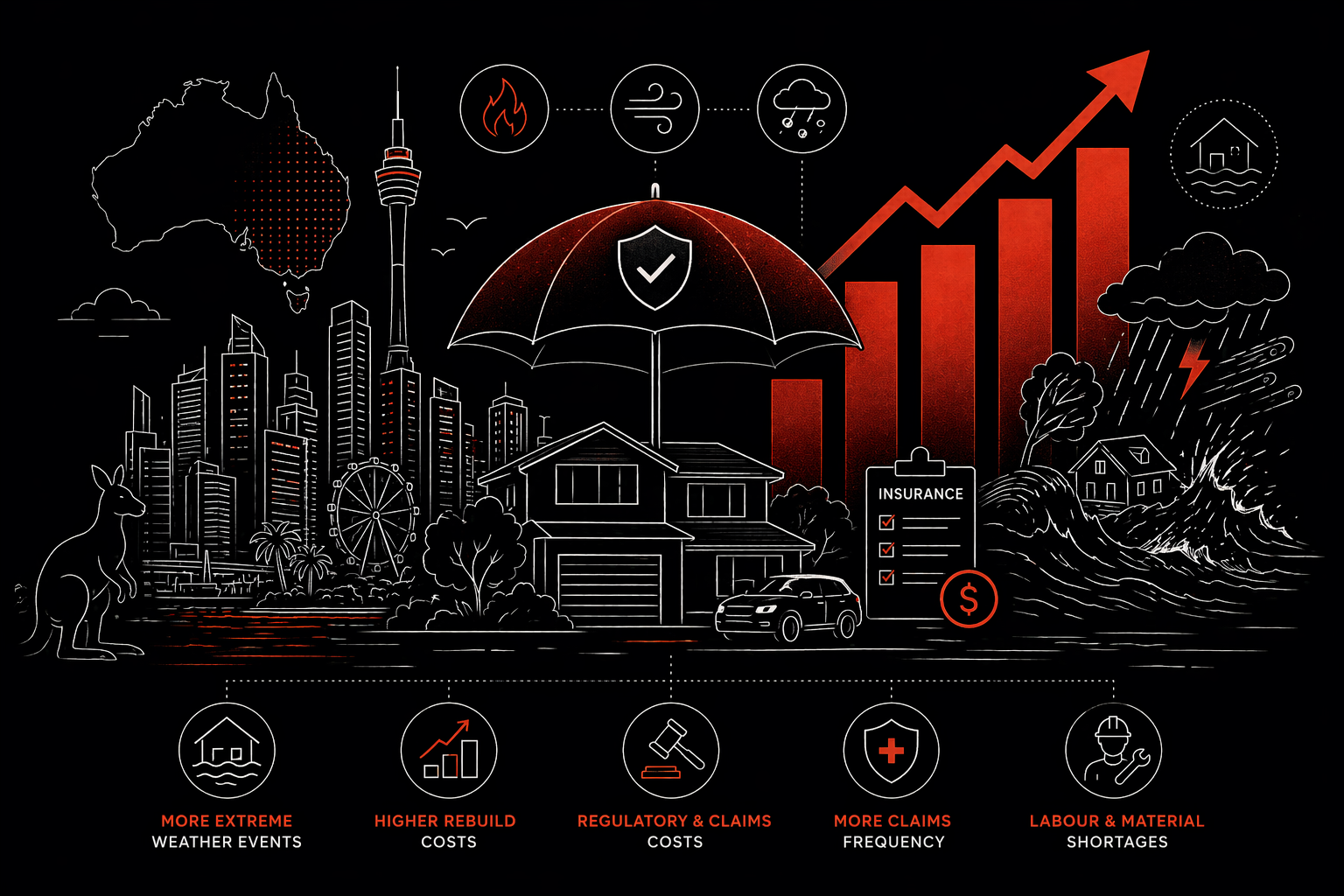
Insurers do not raise premiums arbitrarily. They price risk. When that risk — and the cost of paying claims — goes up, so do your premiums. Right now, several major cost drivers are hitting at once:
- Climate-related claims — more frequent and more expensive
- Reinsurance costs — the price insurers pay to insure themselves has risen sharply
- Building and repair costs — labour and materials remain elevated since the post-COVID construction surge
- Vehicle parts and repair labour — ongoing supply chain pressure
- Fraud and claim inflation — a growing problem across general insurance
Each of these is examined below.
What the ABS Data Shows on Insurance Price Inflation
The Australian Bureau of Statistics (ABS) tracks insurance as part of the Consumer Price Index (CPI) under the Insurance and Financial Services group. This category has consistently recorded price increases above the headline CPI rate in recent years.
According to the ABS Consumer Price Index, insurance and financial services has been one of the faster-moving components of the household expenditure basket, reflecting both higher claim costs and tighter underwriting conditions across the market.
The ABS CPI data is published quarterly and is the most reliable public benchmark for tracking insurance price movements in Australia. Reviewing it at each quarterly release is the clearest way to see how insurance cost growth compares to overall inflation in any given period.
This is also relevant to the broader cost-of-living picture Australians are navigating in 2026. Insurance does not sit in isolation — it compounds alongside rising electricity costs and fuel price pressures Australians are facing to stretch household budgets that are already under significant strain.
Home and Contents Insurance: The Climate Factor
This is where the price pressure is most visible for most Australians.
Natural Disasters Have Repriced Risk Permanently
The 2022 south-east Queensland and northern New South Wales flooding events were among the most costly natural disasters in Australian recorded history, with insured losses running into the billions of dollars. More recently, continued flood events, persistent bushfire exposure, and cyclone activity in northern Australia have forced insurers to fundamentally reassess how they price geographical risk.
The practical result: if you live in a flood-prone area, a cyclone-prone coastal region, or near bushfire-exposed land, your home insurance premium reflects a higher probability of a large claim. That probability is not decreasing.
Reinsurance Costs Have Passed Directly to Consumers
Insurers manage their own exposure by purchasing reinsurance — essentially insurance for insurers — from large global providers. After a sustained run of catastrophic loss years globally, major reinsurers repriced their products significantly. That cost increase has passed through the supply chain directly to retail policyholders in Australia.
This is a structural shift, not a temporary pricing adjustment. Until global reinsurers see a sustained period of lower catastrophe losses, this cost pressure remains embedded in Australian retail premiums.
Rebuilding Costs Remain Elevated
Even where your home is not in a high-risk natural hazard zone, the cost of replacing it has increased substantially. Key factors include:
- Building materials — timber, steel, and other construction inputs remain above pre-2021 price levels
- Trades labour — builders, concreters, and electricians are commanding higher wages across most states
- Supply chain delays — longer repair timelines increase the cost of temporary accommodation payouts, which insurers fund during the repair period
Insurers calculate your sum insured based on the current cost to rebuild your home — not its market value. If that rebuild cost has risen significantly since your policy was first written, your coverage gap has grown even if you have not changed anything about your policy.
Motor Vehicle Insurance: Parts, Labour, and Technology
Comprehensive car insurance premiums have increased for similar structural reasons, though the specific drivers differ from home insurance.
Repair Costs Are Higher Across the Board
Modern vehicles contain more sensors, cameras, and driver-assist technology than previous generations. Repairing a front bumper on a current-model vehicle may now involve recalibrating cameras and parking sensors — a task that adds hundreds of dollars to what would previously have been a straightforward panel repair.
At the same time:
- Auto parts remain more expensive than pre-pandemic levels, particularly for imported components
- Smash repair labour rates have risen in line with broader wage growth
- Replacement vehicle costs — a primary input when writing off a total loss — are still elevated relative to historical averages
Vehicle Theft Is a Growing Claims Cost
Certain vehicle models have experienced increased theft rates, particularly those vulnerable to relay attacks on keyless entry systems. When a stolen vehicle is not recovered, the insurer pays out full replacement value. This increases the total claims pool across the market and is priced into premiums broadly — not just for the models most commonly targeted.
Private Health Insurance: Government-Approved But Still Increasing
Private health insurance operates under a different regulatory framework from general insurance. Premium increases must be approved by the Federal Health Minister each year. Despite that oversight mechanism, premiums have increased every year without exception.
Why Premiums Keep Rising Even With Oversight
The annual approval process considers:
- The cost of medical procedures and hospital services
- Utilisation rates — how frequently members are making claims
- The ageing profile of the insured population
- Government rebate levels, which affect the net cost to consumers
The government does not approve zero increases. It approves what it determines is a reasonable reflection of actual cost increases in the health system. The outcome for policyholders is a premium that rises every April regardless of whether they made any claims.
For context on how government spending decisions affect household costs more broadly, see our breakdown of what the 2026 federal budget means for households.
The Rebate Threshold Problem
The Australian Government Private Health Insurance Rebate is income-tested. As wages have grown across the economy and the income thresholds have not kept pace with earnings, more Australians have shifted into lower rebate tiers — or lost the rebate entirely. For these households, the effective cost of private health cover has increased even in years when the approved premium rise was modest.
State-by-State: Where Premiums Are Highest
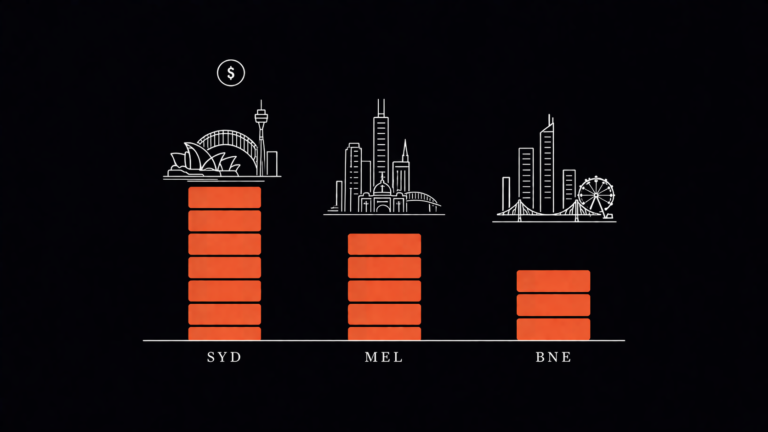
Geography is one of the most significant pricing variables for home and contents insurance. The following table summarises the primary natural hazard risk by state and the resulting premium pressure, based on publicly available hazard mapping and insurer underwriting signals.
| State / Territory | Primary Hazard Risk | Relative Premium Pressure |
|---|---|---|
| Queensland | Cyclone, flood, hail | Very high |
| New South Wales | Flood, bushfire, hail | High |
| Victoria | Bushfire, flood | High |
| Western Australia | Cyclone (north), bushfire | High (north), moderate (Perth metro) |
| South Australia | Bushfire, extreme heat | Moderate–high |
| Tasmania | Bushfire, flood | Moderate |
| Northern Territory | Cyclone, flood | Very high |
| ACT | Bushfire | Moderate |
Risk classifications are based on publicly available natural hazard mapping and general insurer underwriting patterns. Actual premiums vary by postcode, property construction type, and individual insurer.
Households in northern Queensland and parts of regional New South Wales face some of the steepest premium increases in the country. In certain high-risk postcodes, insurers have withdrawn cover entirely or imposed excesses so high that making a claim becomes practically unviable for most households.
Is the Insurance Market Becoming Unaffordable?
This is the more serious underlying question that sits behind the premium increase story.
The Australian Institute of Health and Welfare tracks financial stress indicators across Australian households. Forgoing or reducing insurance cover is a measurable financial hardship response — one that tends to increase when premiums rise faster than household incomes.
Several patterns are emerging:
- Underinsurance — Many households carry less cover than required to fully rebuild or replace assets. Reducing the sum insured is commonly used as a cost-cutting measure at renewal, creating a coverage gap that only becomes visible at claim time
- Non-insurance — Some households, particularly in high-risk regional areas, are dropping cover entirely because premiums have become unaffordable
- Policy lapses — Premium increases at renewal are the most common trigger for a household to let a policy lapse
The structural problem here is that those most exposed to risk — households in disaster-prone areas — are often the least able to absorb the premium increases driven by that very exposure. It is one of the more difficult market failures that insurance regulators and governments are currently grappling with.
What You Can Actually Do About It
The systemic cost drivers are outside your control. What is within your control is how you respond to them.
For home and contents insurance:
- Review your sum insured every year — do not let it fall below actual current rebuild cost, but do not over-insure either
- Increase your excess in exchange for a lower base premium, only if you could genuinely absorb that excess at claim time
- Get competing quotes at every renewal — insurer pricing varies meaningfully for the same property
- Install approved security systems, deadlocks, or flood mitigation measures where applicable — some insurers discount for these
For motor vehicle insurance:
- Consider whether agreed value or market value cover is more appropriate for your vehicle’s age and current value
- Review your excess level — a higher excess typically reduces your premium
- For older, lower-value vehicles, assess whether comprehensive cover remains cost-effective versus third-party property
For private health insurance:
- Check your income against current rebate tiers — you may be entitled to a higher government rebate than you are currently claiming
- Review your extras cover; many policyholders pay for ancillary benefits they rarely or never use
- Hospital cover generally delivers more value than extras — if you need to reduce costs, review extras first
These decisions carry trade-offs and depend heavily on your individual financial position. See the disclaimer below.
How Insurance Fits Into the Broader Cost-of-Living Pressure
Insurance is one of several categories where Australians are experiencing price growth well above headline inflation. The RBA’s approach to managing inflation — and its direct effect on household finances — is covered in our analysis of the RBA’s 2026 rate decisions. The RBA’s inflation and monetary policy page also provides context on how the central bank weighs cost-of-living pressures when setting the cash rate.
For households already managing higher mortgage repayments, elevated energy bills, and dearer groceries, insurance premium increases land on top of a budget that has already been compressed from multiple directions. The ABS CPI remains the most reliable public tool for tracking how insurance costs are moving relative to other expenses — and the quarterly releases in 2026 will continue to show whether the gap between insurance inflation and headline CPI is narrowing or widening.
FAQ
Why did my home insurance go up so much this year?
The most common causes are increased reinsurance costs passed on by your insurer, a higher calculated rebuild cost for your property, or an updated risk assessment of your postcode based on flood, bushfire, or cyclone exposure. In most cases, it is a combination of more than one factor.
Can I negotiate my insurance premium?
You can ask your insurer to review your premium, particularly if your circumstances have changed. The more effective approach in practice is to obtain competing quotes at renewal. Insurers price risk differently and there is often a meaningful difference between them for the same property or vehicle.
Why is insurance so much more expensive in Queensland than other states?
Queensland carries a higher concentration of natural hazard risk than most other states — cyclones in the north, major flooding across large parts of the south-east, and significant hail events in urban areas. Reinsurers and insurers price this risk directly into premiums. Within Queensland, premiums vary sharply by postcode depending on how close a property is to a flood plain or cyclone track.
Does the government regulate how much insurers can raise premiums?
For general insurance — home, contents, and motor vehicle — there is no government-set cap on premium increases. The market is regulated primarily for solvency and conduct, not price. Private health insurance increases require annual Federal Government approval, but approval does not mean increases are zero or low.
What is underinsurance and why does it matter?
Underinsurance is when your policy payout would not cover the full cost of rebuilding or replacing what you have insured. It is common because sum-insured values are set once and not updated frequently enough to keep pace with rising building costs. If you claim and your sum insured falls short of actual rebuild cost, you carry the shortfall yourself.
Conclusion
Insurance prices rising in Australia in 2026 reflect compounding structural pressures — climate risk, reinsurance market tightening, and elevated building and repair costs — that are not reversing in the short term. The most useful actions for households are to understand what is specifically driving their own premium increase, ensure they are not dangerously underinsured, and compare the market at every single renewal without exception.
This article is for informational purposes only and does not constitute financial, legal, or insurance advice. Data is sourced from publicly available Australian government sources and is accurate at time of publication. Please consult a registered professional for advice specific to your situation.